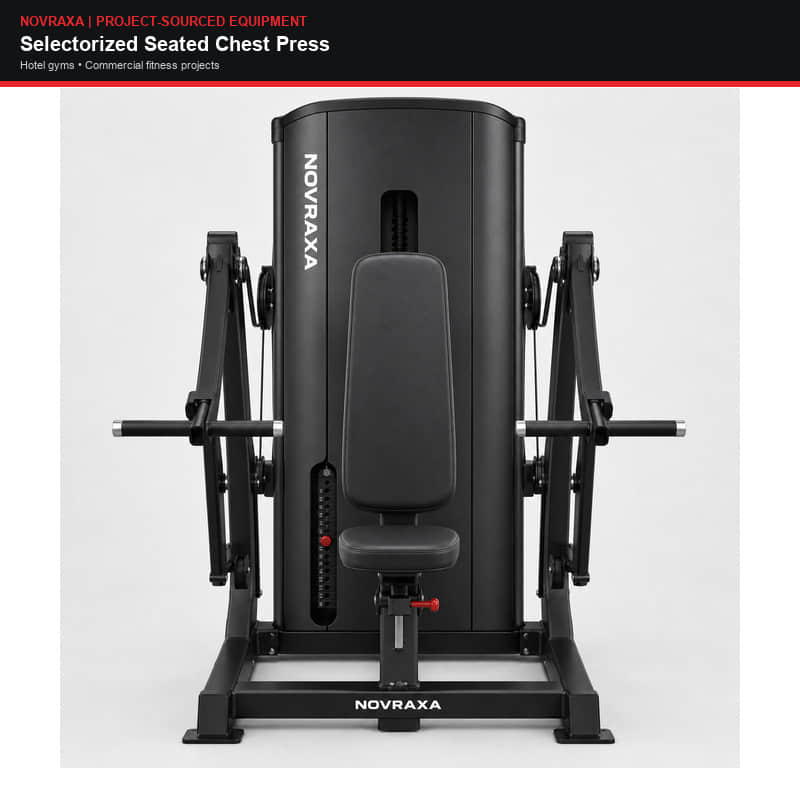
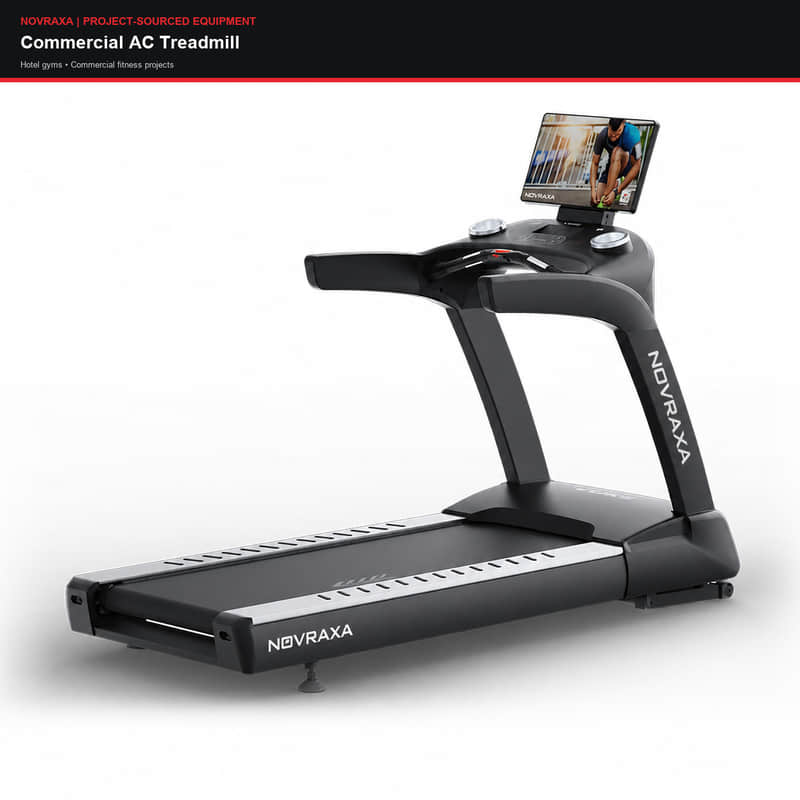
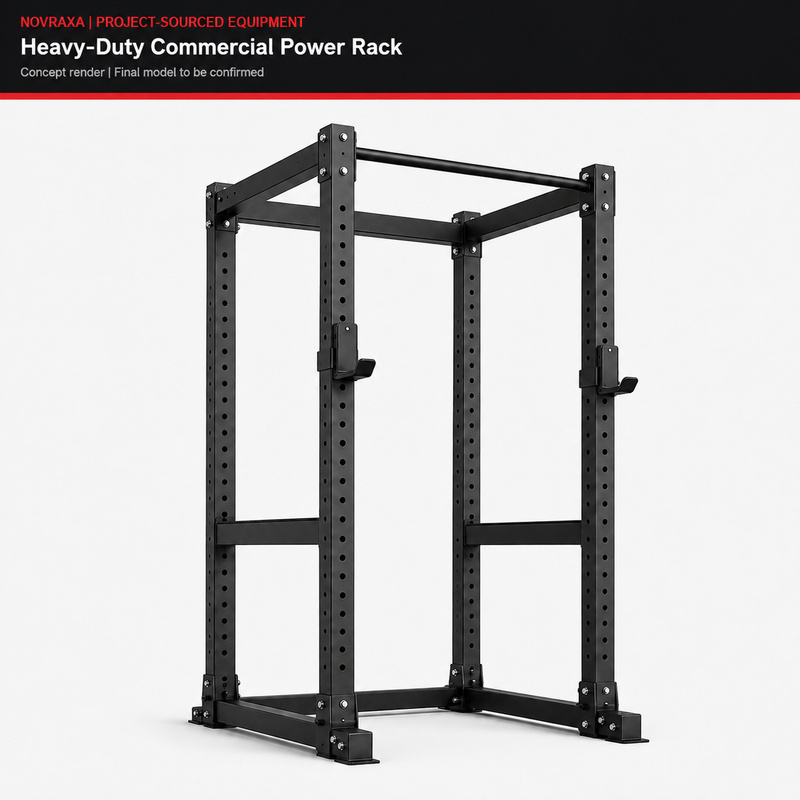
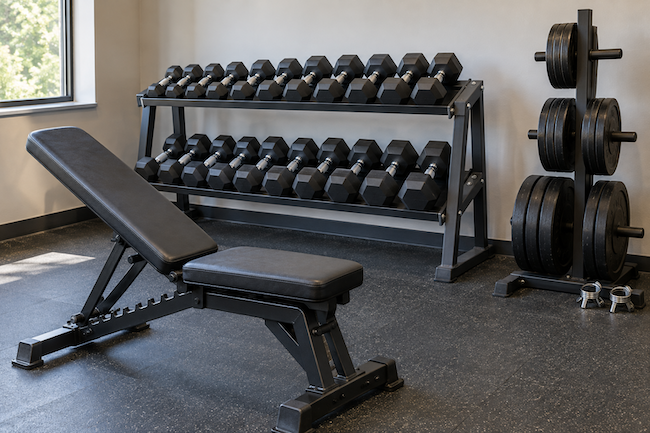
Welcome to NOVRAXA Fitness Equipment


Cable Machine Names Explained: What Commercial Gym Buyers Actually Need to Know
Buying cable machines sounds easy — until you open a supplier’s catalogue.
Functional trainer. Cable crossover. Adjustable pulley. Lat pulldown. Low row. Dual pulley. Multi-station.
The names keep coming.
Here’s where buyers get confused: some of these machines look different but cover many of the same exercises. Others look similar but create a very different training experience.
And if you are buying for a commercial gym, hotel fitness room, residential project, or distribution business, misunderstanding those differences can cost you more than the price of an extra machine.
It can cost you valuable floor space.
It can also leave you with an equipment list full of functions you have already paid for somewhere else.
Here’s a common situation.
A buyer is preparing an equipment list for a medium-sized gym.
The list includes a functional trainer, a large cable crossover, a lat pulldown, a seated row, and another dual adjustable pulley machine.
Every machine looks useful on its own.
But step back and ask a different question:
What training function is each machine actually adding to the gym?
Suddenly, the list looks different.
The buyer was choosing machine names.
What he really needed to choose was training functions, capacity, and user experience.
That is a much better way to build a gym.
So this guide is not another dictionary of cable machine names.
Yes, we’ll explain what a functional trainer, cable crossover, and lat pulldown are.
But more importantly, we’ll answer the questions that matter when your money is on the table:
What does each machine actually do?
Where do their functions overlap?
Which one makes sense for a hotel gym, and which one makes sense for a busy commercial gym?
And perhaps the most important question:
Does your gym really need all of them?
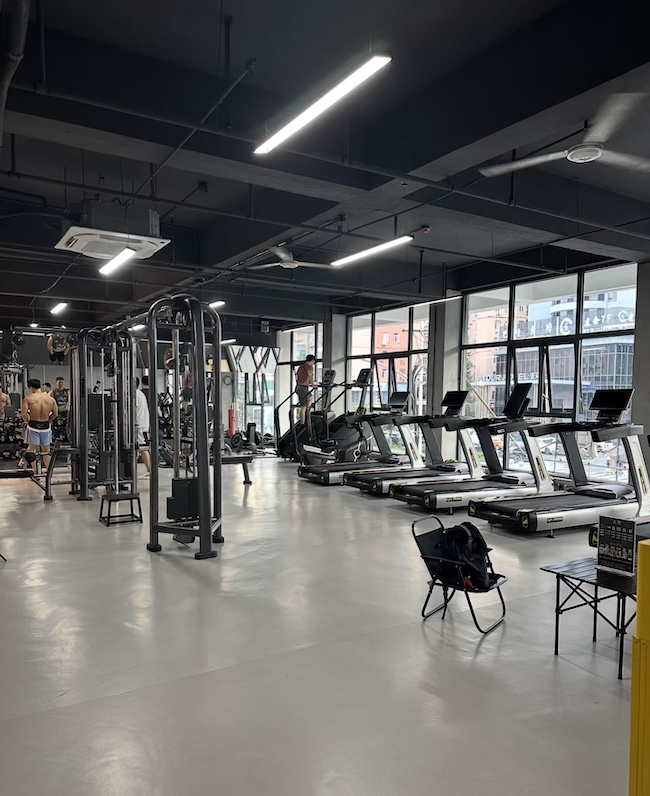
1. Functional Trainer: It Can Do Almost Everything — But That Doesn’t Mean It Should
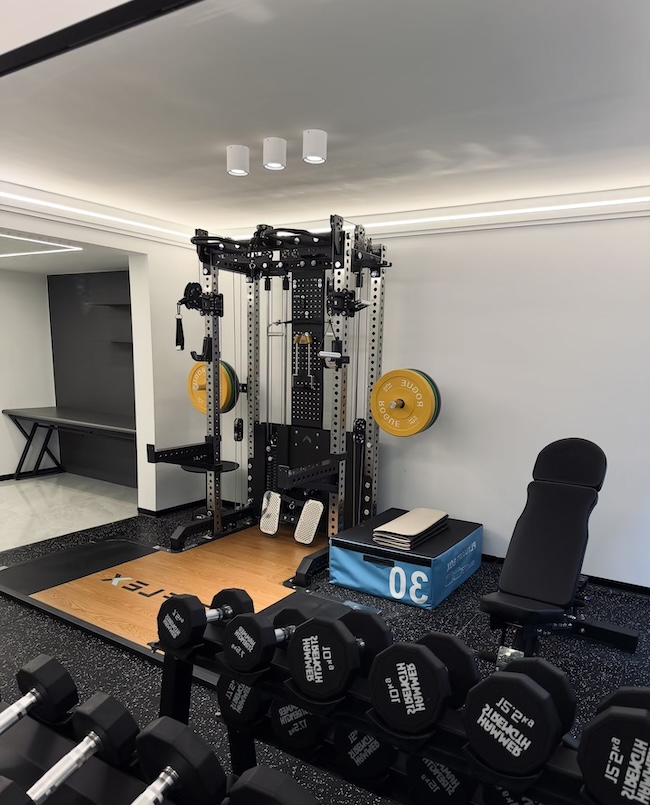
A functional trainer normally has two adjustable pulley columns.
Move the pulleys up or down, change the attachments, and one machine can suddenly handle a long list of exercises:
l Cable fly
l Triceps pushdown
l Biceps curl
l Lateral raise
l Face pull
l Cable squat
l Wood chop
l Single-arm row
l Core and rotational movements
That versatility is exactly why functional trainers make so much sense in hotel gyms and smaller fitness facilities.
But it also creates one of the biggest misunderstandings in cable equipment purchasing:
“This machine can perform the exercise” does not mean “this is the best machine for that exercise.”
Imagine an 80–100 m² hotel fitness room.
You might have space for several cardio machines, a dumbbell area, an adjustable bench, and only a few strength stations.
In that situation, a functional trainer is extremely useful.
Instead of filling the room with several isolation machines, one dual-pulley station can give hotel guests a wide range of training options.
Now change the scenario.
Imagine a 1,500 m² commercial gym serving hundreds of members.
It is 7:00 p.m. One member is doing cable flys. Another wants triceps pushdowns. A third wants face pulls. A fourth is waiting.
Technically, the functional trainer can perform every one of those exercises.
Operationally, it cannot serve everyone at the same time.
That difference matters.
Buying Advice
For a hotel gym, apartment gym, corporate fitness room, or smaller facility, a functional trainer can offer excellent exercise variety per square metre.
For a busy commercial gym, think of it differently.
Use it as a versatile training station — not as a replacement for every dedicated machine in the gym.
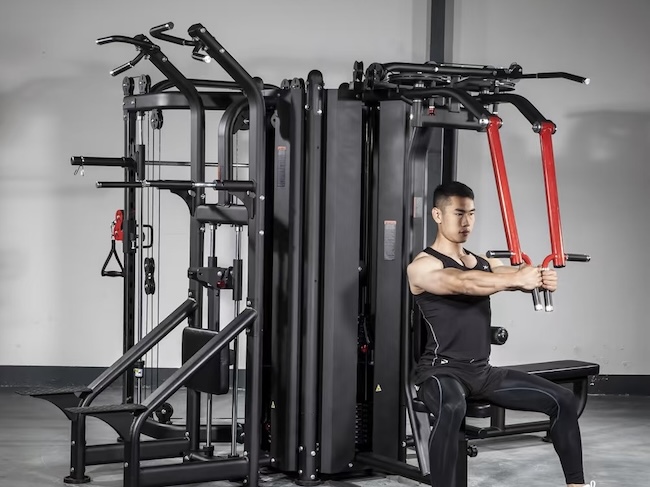
2. Cable Crossover: More Floor Space Isn’t Always a Disadvantage
Look at a traditional cable crossover and you may ask:
“Isn’t this basically a bigger functional trainer?”
Fair question.
There is plenty of overlap.
But one important difference is space.
A traditional cable crossover usually provides considerably more distance between the two pulley towers.
That changes how the machine feels.
Think about a standing cable chest fly.
On a compact functional trainer, you can perform the movement.
But depending on the frame width and pulley geometry, your working area may feel tighter.
With a wide cable crossover, the user has more room to stand between the towers, step forward, adjust body position, and experiment with different pulling angles.
For some gyms, that open training area is valuable.
But you are paying for it with something every gym owner understands:
Floor space.
Go back to our 80–100 m² hotel gym.
A few extra square metres can completely change the layout.
Now imagine a 2,000 m² commercial club with a large strength-training area.
The calculation changes.
You may happily give cable training more room because members actually need it.
That is why asking: “Which machine is better?” is usually the wrong question. A better question is: “Which machine is better for this gym?”
Buying Advice
Before choosing between a compact functional trainer and a wide cable crossover, measure more than the machine footprint.
Think about the space a member needs to:
l stand behind the cable,
l step forward,
l fully extend the arms,
l change attachments,
l and train without interfering with the next station.
A cable machine does not only occupy the space under its frame.
It occupies the space needed to use it properly.
3. Lat Pulldown: Your Functional Trainer Can Pull Down. That Doesn’t Make It a Lat Pulldown.
This is where equipment lists often get confusing.
You see a functional trainer with high pulleys.
Then you see a dedicated lat pulldown.
So you ask:
“Why buy both? Can’t I just attach a long bar to the functional trainer?”
In many cases, yes.
You can perform a vertical pulling movement.
But now stop thinking about whether the exercise is technically possible.
Think about the person actually using the machine.
A dedicated commercial lat pulldown normally gives the user:
l a proper seat,
l thigh pads for stabilization,
l a predictable setup,
l and a station designed specifically for vertical pulling.
That simplicity matters.
Picture a beginner walking into a busy commercial gym.
Option one:
Find the correct attachment. Adjust the cable position. Find a suitable bench if required. Work out where to sit. Set everything up.
Option two:
Sit down. Adjust the thigh pads. Grab the bar. Pull.
That is why dedicated machines still matter in commercial gyms.
They reduce setup time.
They make the exercise easier to understand.
And they free up multifunctional cable stations for other exercises.
Buying Advice
If you are equipping a small hotel gym, the high-pulley function of a functional trainer may cover basic vertical pulling needs.
If you are building a busy commercial gym where back training is performed all day, a dedicated lat pulldown becomes much easier to justify.
Ask yourself:
Will this movement be used occasionally, or will members use it every day?
The more frequently a movement is used, the stronger the case for giving it a dedicated station.
Buyer Comparison: Functional Trainer vs. Cable Crossover vs. Lat Pulldown
If the names are starting to blur together, use this table as a starting point.
The question is not which machine is “best.”
The question is which one fits your facility and your users.
Buyer Question | Functional Trainer | Cable Crossover | Lat Pulldown |
Primary purpose | Versatile full-body cable training | Open cable training with greater working space | Dedicated vertical pulling |
Exercise variety | Very high | High | Low to medium |
Floor-space efficiency | Excellent | Lower | Good |
Beginner-friendly | Medium | Medium | High |
Best for heavy lat training | Possible, but not its main strength | Possible depending on setup | Excellent |
Hotel gym suitability | Excellent | Usually less space-efficient | Useful when space allows |
Commercial gym suitability | Excellent as a versatile station | Strong option for larger cable zones | Strong option for high-use back training |
Small gym suitability | Excellent | Often difficult to justify | Depends on member demand |
Peak-hour advantage | Can become busy because many exercises share one station | Can provide more usable cable space | Takes vertical pulling traffic away from multifunctional stations |
Main overlap risk | Overlaps with crossover, pulldown and row movements | Significant overlap with functional trainer | Overlaps with high-pulley cable movements |
Main reason to buy | Maximum versatility from limited space | More freedom of movement and open cable space | Simple, dedicated and repeatable pulling experience |
Main reason not to buy | Too many exercises may compete for one station | Requires more floor space | Limited versatility |
The Short Version
Limited space? Start by looking at a functional trainer.
Large commercial gym with a dedicated cable area? A cable crossover may make much more sense.
Members constantly train back? Give lat pulldowns their own station.
And if you run a large, busy commercial gym, buying all three is not automatically wasteful.
The important word is:
Intentional.
Accidental overlap wastes money.
Intentional overlap increases capacity.
4. The Real Problem Isn’t Machine Choice. It’s Accidental Overlap.
Here is another common way equipment lists grow.
l Treadmill? Add it.
l Chest press? Add it.
l Functional trainer? Add it.
l Cable crossover? Add it.
l Lat pulldown? Add it.
l Seated row? Add it.
l Multi-station? Add that too.
Every decision sounds reasonable on its own.
Then you look at the finished list and realize you may have paid for the same training function three times.
Take pulling exercises.
Your functional trainer provides high and low cable positions.
Your dedicated lat pulldown covers vertical pulling.
Your seated row covers horizontal pulling.
Your multi-station may include another lat pulldown and low row.
Are any of those machines bad?
No.
The question is whether your gym needs that much overlap.
For a large commercial gym with hundreds of active members, overlap may be exactly what you want.
Multiple pulling stations mean fewer people waiting at peak hours.
For a 100 m² hotel fitness room, the same duplication could simply consume floor space and budget.
That is why we prefer looking at equipment lists by movement and usage, not just product names.
Before approving your list, map the equipment against these basic categories:
l Push
l Pull
l Squat
l Hip-dominant movements
l Core
l Free weights
l Cardio
l Flexible cable training
Then look again.
Where are the gaps?
Where are the overlaps?
And most importantly:
Which overlaps are intentional?
Buying Advice
Mark the main function of every machine on your equipment list.
Highlight machines covering similar movements.
Keep the overlap where member demand justifies it.
Remove the overlap where it adds cost without improving the training experience.
That exercise can sometimes save more money than negotiating another 2–3% off the factory quotation.
5. A Hotel Gym and a Commercial Gym Should Not Buy the Same Cable Setup
Let’s make this practical.
Imagine three buyers.
Buyer A is planning a 90 m² hotel fitness room in Dubai.
Buyer B is building a 1,200 m² commercial gym in Riyadh.
Buyer C distributes commercial gym equipment to different projects across the Middle East and Southeast Asia.
All three buyers ask:
“Which cable machines should I buy?”
They should not receive the same answer.
The Hotel Buyer
Space and simplicity matter.
Hotel guests have very different training backgrounds. Many just want a convenient workout before breakfast or after work.
A functional trainer can make a lot of sense because one station provides many exercise options.
Filling the room with every dedicated cable machine probably does not.
The Commercial Gym Owner
Capacity becomes more important.
If hundreds of members train every day, saying: “This machine can perform 30 exercises” does not solve the whole problem.
What happens at 7:00 p.m. when five people want it?
That gym may reasonably use a functional trainer, dedicated lat pulldown, low row, cable crossover, and other cable stations.
There is overlap.
But this time the overlap has a purpose.
The Distributor
The question changes again.
You need equipment your customers can understand, install, maintain, sell, and reorder.
A machine offering dozens of possible movements may look impressive.
But sometimes a simple commercial lat pulldown is easier to specify, easier to explain, and easier for the final gym owner to use.
This is why, when Novraxa looks at an equipment project, one of the first questions should be:
“What kind of facility are you building?”
Then we can talk about:
l floor size,
l expected users,
l training style,
l equipment mix,
l budget,
l and destination market.
Only then does the machine list start to make sense.
6. Two Machines Can Have the Same Name and Still Be Very Different
This may be the most important point when you start comparing Chinese suppliers.
Two factories can both send you a quotation for a: “Commercial Functional Trainer.”
The product names may be identical.
The machines may even look similar in photos.
That does not mean the training experience is identical.
Look beyond the name.
Ask about:
l Weight stack configuration
l Cable ratio
l Pulley travel
l Pulley quality
l Cable routing
l Adjustment range
l Handle and attachment options
l Frame dimensions
l Seat or thigh-pad adjustment where applicable
l Actual working space around the machine
Then look beyond the machine itself.
How will it be packed?
How much assembly is required?
How are different finishes coordinated across your order?
What happens if several equipment categories come from different manufacturers?
How will the machines be inspected before loading?
These questions become especially important when you are sourcing an entire gym rather than one piece of equipment.
Because you are not buying a product photo.
You are buying thousands of future workouts.
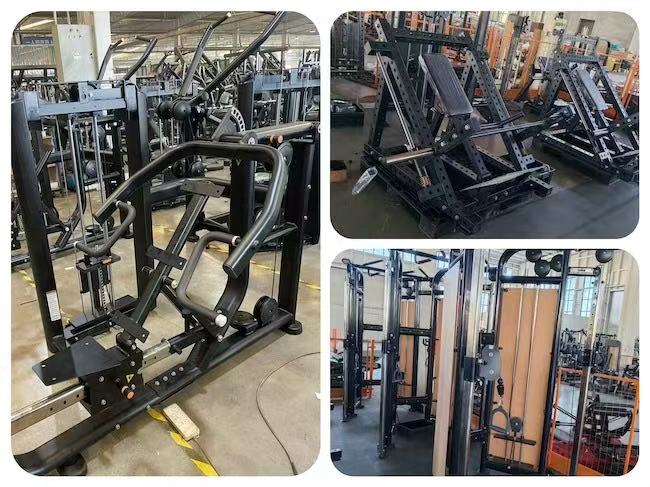
What We’ve Learned From Visiting Equipment Factories in Ningjin
Ningjin is home to a huge number of gym equipment manufacturers. When I visit factories there to compare equipment for buyers, one thing becomes obvious very quickly:
Two machines that look almost identical in a catalogue can be very different once you see them up close.
I’ve seen factories offering very attractive prices, but when you look closer, you may find thinner steel sections, simpler components, or less attention to finishing.
At another factory, a similar-looking machine may use heavier steel sections, different steel grades, better welding, smoother cable routing, or more refined finishing.
That doesn’t automatically mean the more expensive machine is always the better choice.
It means you need to understand what you are actually paying for.
And this is something I’ve learned from visiting manufacturers in Ningjin: there is no single factory that is the best at everything.
Some larger, well-known manufacturers have excellent production capacity and strong product lines, but that doesn’t mean every machine they make is better than what a smaller factory can produce.
I’ve visited smaller manufacturers whose attention to detail on certain machines was surprisingly good.
The opposite can also be true.
That is why, when we compare suppliers, we don’t only ask:
“Which factory is the biggest?”
or:
“Who gave us the lowest price?”
We look at which manufacturer is stronger for the particular equipment a project needs.
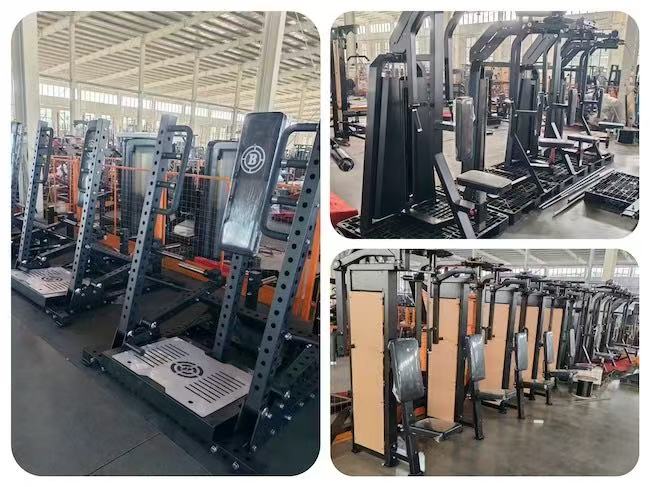
One factory may be better at cardio equipment. Another may have a stronger selectorized strength line. Another may do an excellent job with racks, benches, or plate-loaded machines.
That is the role Novraxa wants to play.
Instead of asking one factory to be good at everything, we help buyers identify the stronger products from different manufacturers and bring them together into one more sensible equipment package.
For the buyer, that can mean less time spent comparing dozens of factories, fewer compromises on equipment selection, and a clearer understanding of where the money is actually going.
Not simply: “Here is our catalogue. Choose what you want.”
But: “Tell us what you are building. Then let’s work out what equipment actually belongs in it.”
Because filling a container is easy.
Building the right gym is harder.
So, Which Cable Machine Should You Buy?
If you remember only one thing from this guide, remember this:
A functional trainer, cable crossover, and lat pulldown are not three different names for the same machine.
But they also should not automatically become three boxes on your purchase order.
A functional trainer gives you versatility.
A cable crossover gives you more open cable-training space.
A dedicated lat pulldown gives you a simple and focused vertical pulling station.
For a small hotel fitness room, versatility may matter most.
For a large commercial gym, capacity may matter more than saving a few square metres.
For a distributor, serviceability, customer demand, installation, and repeatability may matter just as much as exercise variety.
There is no universal cable machine list.
And that is exactly the point.
When you are investing tens of thousands — or hundreds of thousands — of dollars in a gym project, your goal should not be to buy as many machine names as possible.
Your goal is to build a gym where the equipment, users, floor space, and budget make sense together.
Planning a Commercial Gym Project?
If you are sourcing commercial gym equipment from China, send Novraxa:
your facility type, approximate floor size, expected users, equipment list, budget range, and destination country.
We can start by looking at the project itself.
Where are the gaps?
Where are the functions overlapping?
Which equipment deserves a dedicated station?
And where could one versatile machine do the job of several?
You don’t need to start by filling a container.
Start with the gym you actually want to build.
And if you are still working on your equipment list, keep following Novraxa.
In our next guide, we’ll answer another question that often comes up when planning a commercial gym:
Functional Trainer vs. Multi-Station Gym: Do You Need One, or Both?