Welcome to NOVRAXA Fitness Equipment


Commercial Gym Equipment Names: Is Your Purchase Order Buying the Wrong Machine?
The wrong machine can arrive even when everyone agrees on its name. “Chest machine.” “Cable station.” “Exercise bike.” These words sound clear enough to approve. But they can leave the movement, configuration, accessories, and usable resistance unsettled. A purchase order can look complete while the most important decisions are still missing.
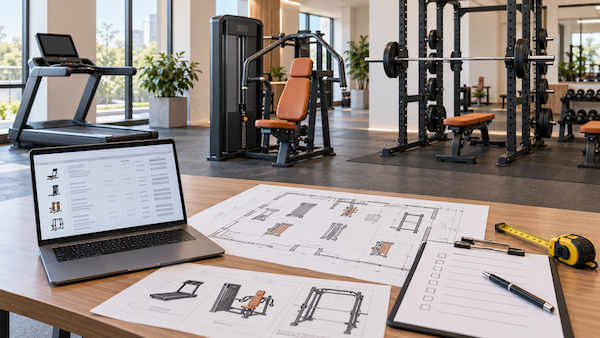
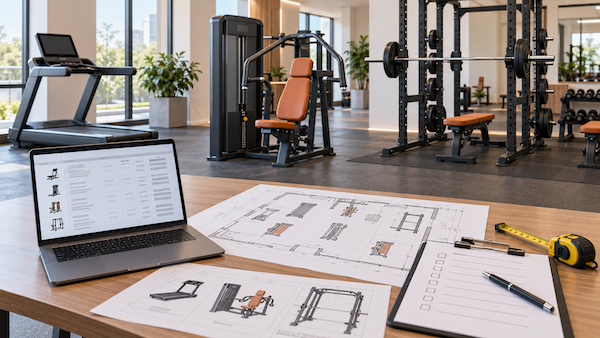
Imagine this illustrative hotel procurement meeting in Dubai. A buyer has twelve machines on a spreadsheet and a floor plan beside her laptop. The quotation says “Butterfly.” The photograph shows a chest fly machine. “Does it also train the rear shoulders?” the manager asks. “I thought that was included.” The buyer checks the description. No confirmed model. No operating video. No second function listed. Just a familiar name.
This guide explains commercial gym equipment names that are often confused in purchase orders—and how to turn those names into clearer buying decisions. We will compare machines, identify useful and unnecessary overlap, and show what to write before approving production. Whether you own a gym, purchase for a hotel, distribute equipment, or import from China for the first time, the goal is practical: receive the equipment your facility actually needs.
My starting rule: identify the movement, confirm the configuration, then approve the model.
Quick Comparison: Names That Need More Detail
Names buyers may confuse | What the purchase order must clarify |
Pec deck, butterfly, pec fly, chest press | Fly or pressing movement; single or combined functions |
Functional trainer, cable crossover, dual adjustable pulley | Pulley arrangement, usable resistance, attachments, and capacity |
Smith machine, power rack, squat rack | Guided bar or free barbell; frame and safety accessories |
Leg press, hack squat, leg extension, leg curl | Movement, body position, loading system, and independent stations |
Exercise bike, indoor cycle, air bike, recumbent bike | Riding position, resistance, handle movement, and controls |
Commercial treadmill, AC treadmill, multimedia treadmill | Confirmed operating specifications and console configuration |
Complete gym package | Individual models, quantities, accessories, and delivery scope |
Supplier terminology varies. Use this table to identify questions, then answer them with model-specific documents.
1. Pec Deck, Butterfly, and Chest Press: “Chest Machine” Leaves Too Much Open
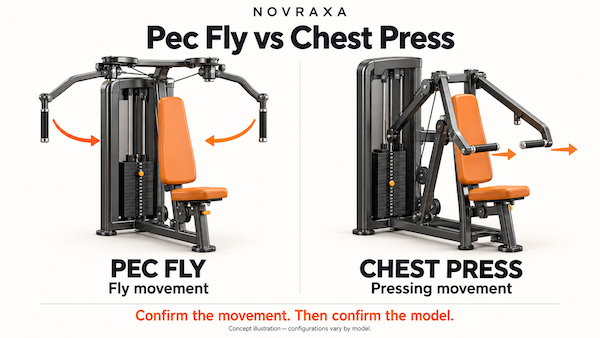
A pec deck or pec fly machine generally supports a chest fly movement. A chest press supports a pressing movement.
Both involve the chest. They do not provide the same exercise.
“Butterfly” is a common catalogue name for a fly machine. Depending on the supplier, it may describe a single-function unit or a combination machine that also supports rear-deltoid exercises.
I would not approve “Butterfly Machine — 1 unit” without confirming those functions.
A documented example is the Life Fitness Axiom Pectoral Fly/Rear Deltoid. The manufacturer identifies it as a two-in-one machine covering chest fly and rear-deltoid exercises.
That confirms two functions on that model. It does not prove that every “butterfly” machine includes both.
For a hotel with limited space, the combination may offer useful coverage. For a busy commercial gym, separate stations may make sense if demand supports them. Two functions on one shared station still do not create two independent user positions.
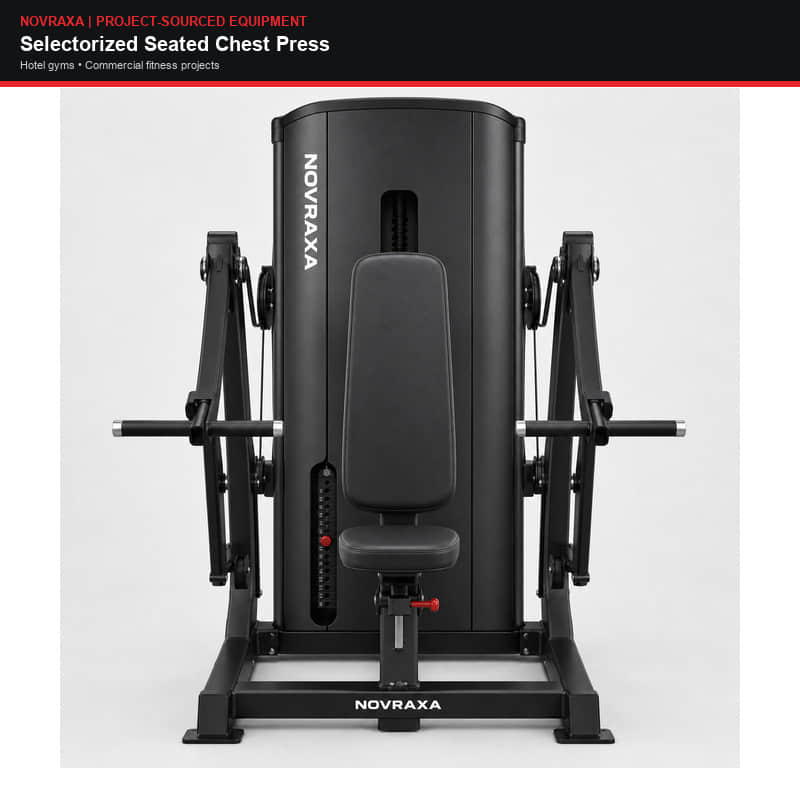
The chest press needs another distinction: selectorized or plate-loaded?
A selectorized machine uses a built-in weight stack, typically adjusted with a pin. A plate-loaded machine uses separate weight plates.
Consider how people will use it. Do they need quick weight changes? Do you already have compatible plates? Where will spare plates be stored?
If your shortlist includes a chest press, bench press setup, and fly machine, identify what each adds. Different movements or extra capacity can justify the combination. Different names alone cannot.
Clearer purchase-order description:
Selectorized pectoral fly/rear-deltoid combination machine; both functions required; confirmed model and configuration attached; weight-stack specification, adjustment demonstration, and operating area included in the approval documents.
For a chest press, explicitly state its loading system. Itemize any required plates.
Request a video showing the actual movements and adjustments. One photograph may show the machine clearly while leaving its second function unconfirmed.
2. Functional Trainer, Cable Crossover, and Dual Adjustable Pulley: Compare Resistance, Not Just Stacks
“Cable machine” covers too many configurations to serve as a final order description.
A functional trainer commonly provides adjustable cable outlets for multiple exercises. “Dual adjustable pulley” often describes a similar arrangement. A cable crossover commonly has opposing columns, sometimes with a wider working area.
Manufacturers do not use these names consistently.
Compare the structure and usable specifications.
The Life Fitness Signature Series Dual Adjustable Pulley provides a useful example. Its published specifications list two 177 kg stacks, a 4:1 cable ratio, and approximately 44.2 kg effective resistance per stack.
The weight-stack label does not directly describe resistance at the handle.
If two quotations both say “100 kg cable machine,” you still need the manufacturer’s stated effective resistance, pulley ratio, starting resistance, and adjustment increments.
Then check exercise support.
A high pulley does not automatically provide the same arrangement as a dedicated lat pulldown. A dedicated machine normally includes a seat and thigh restraint. A general cable station may need a different setup.
Similarly, two stacks do not guarantee comfortable simultaneous use for every exercise.
Imagine a trainer using both cables for one client while another member wants a single-arm exercise. That is an illustrative capacity problem: the station offers many exercises, but access remains limited.
For a quieter hotel gym, one versatile station may be sufficient. A larger club may need both general cable training and dedicated pulling capacity.
Clearer purchase-order description:
Dual adjustable pulley station; two independent stacks; confirmed cable ratio and effective resistance; specified pulley adjustment positions, cable travel, attachment list, and approved operating layout.
List the handles, ropes, bars, and ankle straps individually. Accessories appearing in a photograph may not be included.
Ask the supplier to demonstrate your priority exercises on the quoted model.
At NOVRAXA, matching equipment across supplier quotations means looking beyond catalogue labels to functions and configurations. This is exactly where that approach helps: similar photographs can hide a meaningful difference in what you are buying.
3. Smith Machine, Power Rack, and Squat Rack: A Frame Is Only Part of the Order
These products can support overlapping exercises, but their structures differ.
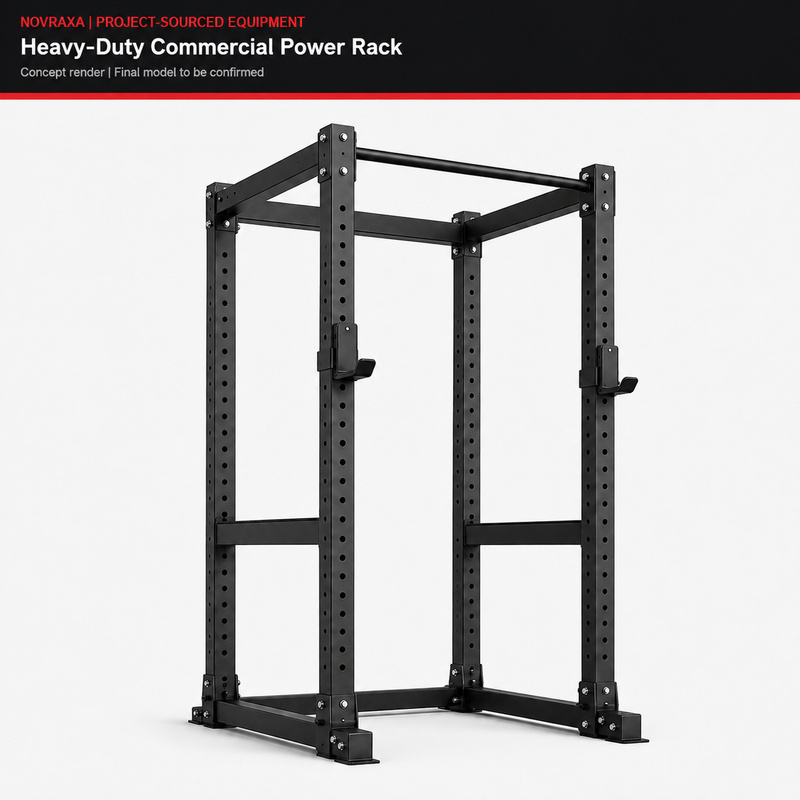
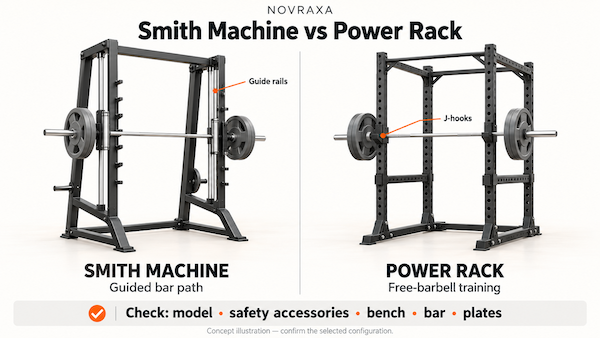
A Smith machine guides its bar along rails. A power rack supports training with a separate free barbell, usually within a surrounding frame. A squat rack or stand may use a more open arrangement.
Hybrid machines complicate the naming. One structure may combine Smith rails, free-barbell supports, and cable attachments.
The word “rack” does not settle the configuration.
The Life Fitness Smith Machine, for example, lists a 7-degree bar angle and a 9 kg bar weight.
Those are model-specific details. Another Smith machine may have a different path or bar specification.
Choose according to your training programme. If users require free-barbell training, Smith rails do not replace that arrangement. An ordinary power rack does not provide guided-bar movement.
Both may deserve space when they serve distinct preferences or capacity needs.
For hotel buyers, also consider equipment instructions, available supervision, storage, and how the proposed training area will operate.
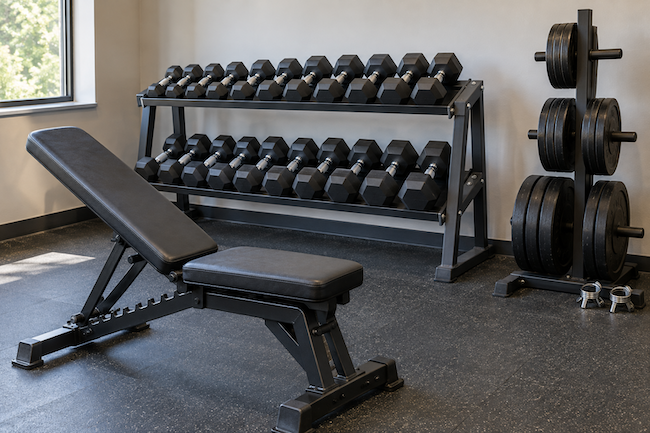
Check what the quotation includes. A rack price may exclude the barbell, bench, plates, collars, or safety accessories. Your spreadsheet might describe a complete station while the offer covers only its frame.
Clearer purchase-order description:
Power rack for free-barbell training; confirmed model and dimensions; specified J-hooks and safety accessories; compatible barbell, adjustable bench, plates, and collars itemized separately.
For a Smith machine, identify the guided-bar configuration, bar specification, safety-stop arrangement, and included accessories.
Request an assembled demonstration showing bench positioning and plate loading. Fitting the frame into the room does not guarantee enough space for those activities.
We also help coordinate specifications across manufacturers. For a mixed rack-and-free-weight order, compatibility matters: a separately sourced bench, bar, and plate set need to work with the selected structure.
Count complete, usable training positions—not attachment points in a catalogue.
4. Leg Press, Hack Squat, Leg Extension, and Leg Curl: Four Names, Different Movements
“Leg machine” is too broad for a purchase order.
A leg press supports pushing against a platform. A hack squat typically provides a guided squat movement with shoulder and back support. A leg extension straightens the knee against resistance. A leg curl bends it.
Their muscle involvement overlaps, but their movements differ.
Even “leg press” needs detail. A seated selectorized model and an angled plate-loaded model are different purchasing configurations.
Consider the Hammer Strength Plate Loaded Linear Leg Press. Its manufacturer lists a 45-degree design and 53 kg starting resistance.
Starting resistance matters. A machine with substantial loading capacity may still be unsuitable for the starting loads some users need.
Compare user fit, adjustments, starting resistance, and operating space—not just maximum loading.
For leg extension and leg curl, confirm whether the quotation covers two separate machines or one combination unit.
The Life Fitness Axiom Leg Extension/Leg Curl combines both exercises. Its footprint is 142 × 102 cm, while its recommended live area is 249 × 163 cm.
A compact machine still needs room to operate.
Now imagine a hotel shortlist containing that type of combination station plus separate extension and curl machines. This is a planning example.
The arrangement may be intentional if demand justifies extra stations. But if the buyer thought the three names represented unrelated functions, the list needs reviewing.
Clearer purchase-order descriptions:
Vague description | What to specify |
Leg machine | Exact movement and confirmed model |
Leg press | Seated or angled configuration, loading system, and starting resistance |
Leg extension/curl | One combination unit or two separate machines |
Leg press/hack squat | Whether one convertible machine is required; both operating configurations |
Mark each item with its movement and independent user positions. Ask what the additional station contributes.
For convertible equipment, request a demonstration of the changeover and the space required in both configurations.
Use combinations where they suit the project. Keep separate stations where demand gives them a clear purpose.
5. Exercise Bike, Indoor Cycle, Air Bike, and Recumbent Bike: Confirm What Moves
“Exercise bike” can describe several different purchases.
An upright bike offers a relatively upright seated position. A recumbent bike includes a supported backrest. An indoor cycle commonly uses a riding setup suited to cycling sessions.
Air-resistance bikes need particular attention. Some have moving handles for combined arm-and-leg exercise. Air resistance alone does not confirm those handles are present.
Concept2’s BikeErg illustrates the distinction. It uses an air-resistance flywheel and a clutch allowing the flywheel to keep turning when pedalling stops. Its handlebars do not provide the moving arm action associated with many fan bikes.
The model also determines maintenance. Concept2 specifies certain checks every 250 hours of use in its BikeErg maintenance guidance.
That is practical information an operator needs after delivery.
If you order “air bike” for arm-and-leg conditioning, confirm moving handles before approving an air-resistance cycling model.
For hotel use, compare seat adjustment, mounting and dismounting, controls, and guest instructions.
For indoor cycling sessions, check riding position, pedals, resistance control, stopping method, and programme requirements.
Clearer purchase-order description:
Air-resistance exercise bike with moving arm handles; confirmed model; seat adjustment range, pedal configuration, console functions, stopping method, and maintenance documents specified.
If you require a recumbent model, state the backrest requirement and confirm access around the seat.
Ask for an operating video. It can clarify handle movement and adjustment faster than another catalogue paragraph.
Then examine overlap: will another bike serve a different user need or add capacity for the same activity?
Both are valid reasons. What matters is knowing which reason applies before buying.
6. Commercial Treadmill and Complete Gym Package: Replace Broad Labels With Confirmed Specifications
“Commercial” describes an intended market. It does not define a treadmill’s complete configuration.
“AC treadmill” identifies a drive-system category. “Multimedia treadmill” emphasizes console features. “Heavy-duty treadmill” leaves you with a claim that needs supporting specifications.
These labels cannot substitute for a model comparison.
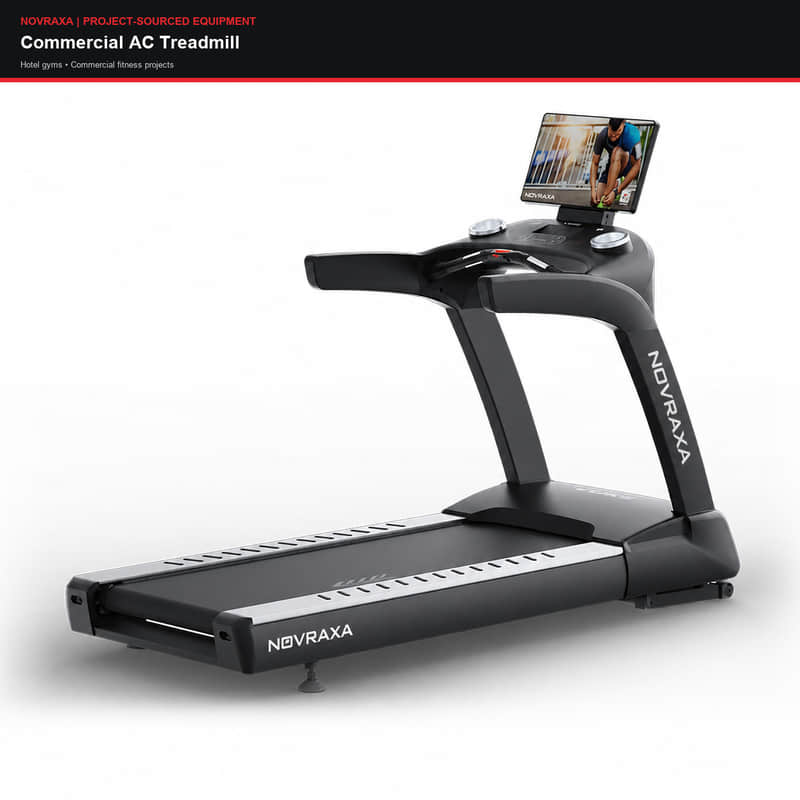
NOVRAXA’s Commercial AC Treadmill page provides a useful example. Its reference motor benchmark distinguishes 3.0 HP rated from up to 7.0 HP peak.
The page also explains that the selected factory must confirm the final model specification.
A reference configuration starts the discussion. A confirmed specification defines the order.
Do not compare rated and peak motor figures as equivalent claims. Ask how the manufacturer defines them and what operating conditions apply.
For your facility, examine the complete system: intended usage, drive specification, running surface, belt and deck, speed, incline, user limit, electrical requirements, and maintenance access.
Clearer purchase-order description:
Commercial treadmill; confirmed factory model; approved motor and drive specification; running surface, speed, incline, user limit, console, electrical requirements, and service documents attached.
Apply the same approach to a “complete gym package.” The phrase cannot tell you whether plates, benches, attachments, assembly, or freight are included.
Give each unit its own line and attach a specification schedule.
Order field | Information to confirm |
Identity | Model, selected configuration, approved photograph |
Quantity | Units and independent training positions |
Function | Required movements and resistance details |
Space | Machine dimensions, operating area, service access |
Accessories | Included items and explicit exclusions |
Electrical | Model-specific requirements where applicable |
Appearance | Confirmed finishes and branding |
Delivery | Packing, freight scope, assembly responsibilities |
Support | Warranty, maintenance documents, spare-parts process |
For bilingual Middle East projects, connect English and Arabic descriptions to one model identity.
Link each requirement to evidence: a specification sheet, drawing, operating video, accessory list, or inspection photograph. Require written approval for changes to the agreed model or configuration.
Our sourcing work at NOVRAXA includes manufacturer coordination, specification consistency, quality checking, and shipment preparation. A clear equipment schedule gives that work a concrete reference.
Common Purchase-Order Questions
Are pec deck and butterfly the same machine?
They often describe chest fly equipment. Confirm whether the selected model is single-function or also supports rear-deltoid exercises.
Is a Smith machine interchangeable with a power rack?
No. A Smith machine guides its bar; a power rack supports a separate free barbell. Some exercises overlap, but the training arrangements differ.
What should a cable-machine quotation include?
Model, configuration, pulley ratio, stated effective resistance, adjustment details, cable travel, attachments, dimensions, and operating requirements.
Does a complete gym package include everything needed?
Only the confirmed scope tells you. Check each model, accessory, exclusion, and delivery responsibility.
How can I reduce substitution misunderstandings?
Attach the approved configuration and require written agreement before model or specification changes. Tie inspection evidence to that same order reference.
Before You Sign, Give Every Machine a Clear Reason to Be There
You do not need to memorize every commercial gym equipment name.
You need to recognize when a familiar word leaves an important decision unanswered.
Is it a fly or a press? A guided bar or a free-barbell rack? One combination station or two independent machines? A cycling-only model or an arm-and-leg bike?
Then ask: why does this equipment belong in your facility?
A useful purchase order records the answer. It connects the training need to the model, configuration, accessories, and delivery scope.
That clarity helps the supplier and installation team. More importantly, it helps the people who will use the equipment after delivery.
Send NOVRAXA your equipment list or supplier quotations through the official website. Include your facility type, floor plan, expected users, and destination country.
Ask us to help clarify names, compare configurations, identify unexplained overlap, and coordinate the specifications that need confirmation.
If you are still researching, keep following NOVRAXA’s equipment selection and sourcing guides.
A better gym begins with a clear reason for every machine you buy.