Welcome to NOVRAXA Fitness Equipment


How to Match Gym Equipment Names Across Supplier Quotations Without Comparing the Wrong Machines
Key Takeaways
When comparing gym equipment supplier quotations, keep these five points in mind:
Compare machines by training function first, not product name.
A combo machine should not be compared directly with a single-function machine.
The same machine name can describe very different equipment.
A proper quotation should include photos, specifications, resistance type and dimensions, not just names and prices.
Compare the complete gym solution first. Compare price last.
Sounds simple.
In practice, gym equipment quotations rarely make it that easy.
The cheapest gym equipment quotation is not always the cheapest quotation.
Sometimes, it is not even quoting the same equipment.
You send the same equipment list to three suppliers in China.
A few days later, three Excel files arrive.
Supplier A writes:
Lat Pulldown
Supplier B writes:
High Pulley
Supplier C writes:
Lat Pulldown / Low Row
Then you look at the prices.
One is USD 850.
One is USD 920.
One is USD 1,150.
Your first thought may be:
Why is one supplier USD 300 more expensive?
But before asking about price, ask a more important question:
Are these three suppliers actually quoting the same machine?
Probably not.
This is where many buyers get confused when comparing commercial gym equipment quotations.
Different factories use different names.
Some use technical names.
Some use marketing names.
Some translate product names directly from Chinese.
Some combine two training functions into one machine.
Others separate those same functions into two machines.
If you compare only the product name and unit price, you may be comparing completely different equipment.
That is why at NOVRAXA, we prefer to start somewhere else.
Training function first.
1. Compare the Training Function Before the Product Name
When I look at a gym equipment quotation, the first question is not:
“What is this machine called?”
The first question is:
“What does this machine actually do?”
You may see names such as:
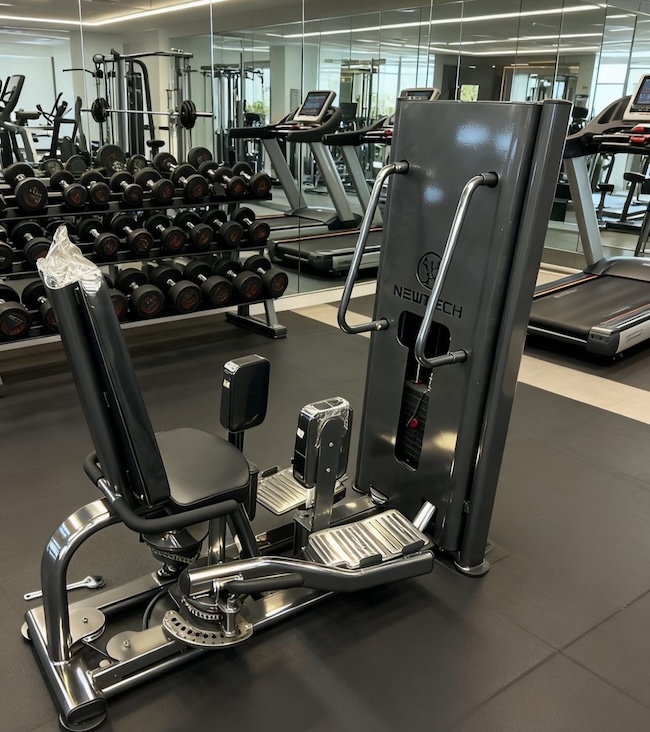
Pec Fly
Butterfly Machine
Chest Fly
Pec Deck
Pec Deck / Rear Delt
Some of these machines may perform almost the same movement.
Others may add another function.
For example, a basic pec fly machine may only train chest fly.
A pec deck / rear delt machine may allow both:
chest fly
rear delt fly
They overlap heavily in function.
But they are not automatically equivalent.
That difference matters when you compare quotations.
A Typical Quotation Problem
Imagine you are planning a 600 m² commercial gym.
You send a list of 45 machines to three suppliers.
Supplier A quotes:
Pec Fly Machine — USD 780
Supplier B quotes:
Pec Deck / Rear Delt — USD 920
At first glance, Supplier A looks USD 140 cheaper.
Should you choose Supplier A?
Not yet.
You check the photos and specifications.
Then you realize Supplier B's machine provides two training positions:
Pec fly
Rear delt
Supplier A's machine only provides pec fly.
Now that USD 140 difference looks very different.
If you still want a separate rear-delt machine, Supplier A's “cheaper” option may eventually require:
another machine
more floor space
more investment
The individual machine is cheaper.
The overall solution may not be.
What Should You Do?
Add another column to your comparison spreadsheet:
Primary Training Function
For example:
Supplier Name | Primary Training Function |
Pec Fly | Chest fly |
Butterfly Machine | Chest fly |
Pec Deck / Rear Delt | Chest fly + rear delt |
Lat Pulldown | Vertical pull |
High Pulley | Vertical pull |
Lat Pulldown / Low Row | Vertical pull + horizontal pull |
This one step removes a lot of confusion.
At NOVRAXA, we look at what the machine is designed to do before we worry about what the factory calls it.
Names change.
Training functions are much more useful for comparison.
Buyer Comparison Worksheet
If you are comparing quotations from several suppliers, do not keep switching between three or four separate Excel files.
Create one master comparison sheet.
Use one row for each required training function.
Then put the supplier options side by side.
Required Function | Supplier A | Supplier B | Supplier C | Machine Type | Resistance | Dimensions | Stations | Equivalent? |
Vertical Pull | Lat Pulldown | High Pulley | Lat Pulldown | Selectorized | Weight Stack | — | 1 | Check |
Chest Fly | Pec Fly | Pec Deck / Rear Delt | Chest Fly | Selectorized | Weight Stack | — | 1 vs 2 | Check |
Horizontal Pull | Seated Row | Low Row | Seated Row | Selectorized | Weight Stack | — | 1 | Check |
You do not need complicated software.
Excel is enough.
The goal is simple:
Put different supplier names into the same purchasing language.
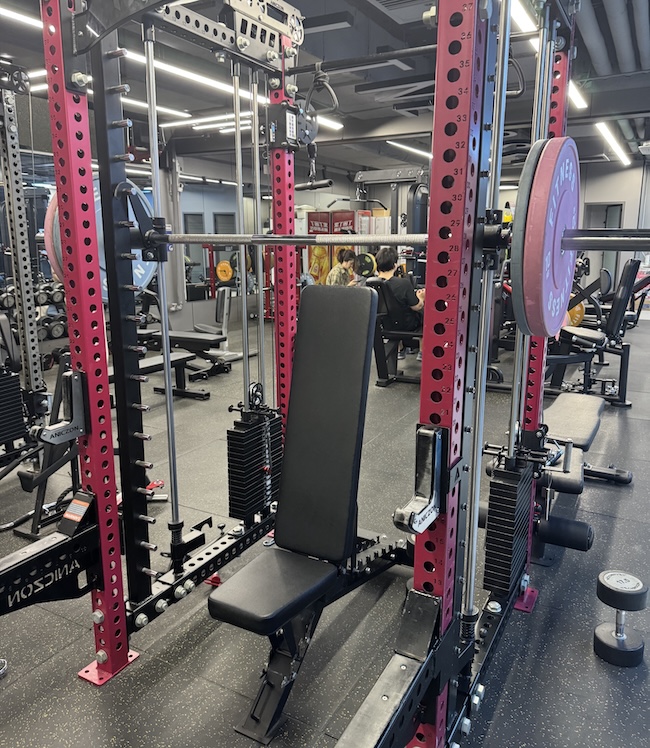
2. Watch Out for Combination Machines
Combination machines are one of the biggest reasons two quotations can look very different.
One supplier may quote two separate machines.
Another supplier may combine both movements into one unit.
Take this example.
Supplier A
Lat Pulldown — USD 850
Seated Row — USD 820
Total: USD 1,670
Supplier B
Lat Pulldown / Low Row Combo — USD 1,150
Supplier B appears to save you USD 520.
Does that mean Supplier B is automatically the better choice?
No.
You need to ask:
How will this machine actually be used in the gym?
For a small hotel fitness room, the combo machine may make perfect sense.
You save space.
You cover two movements with one machine.
And if only a few guests are training at the same time, there may be very little downside.
Now imagine a busy commercial gym.
You may have many members training during peak hours.
With two separate machines:
one member can train lat pulldowns
another can train seated rows
With one combo machine, they may have to wait for each other.
That changes the buying decision.
Two Questions to Ask About Combo Machines
Whenever you see words such as:
Combo
Dual Function
Multifunction
2-in-1
2 Station
4 Station
5 Station
ask two questions.
1. What functions are actually included?
Do not assume from the product name.
Write down every movement.
2. Can those stations be used independently at the same time?
This matters even more.
A machine may offer two exercises but still only allow one person to train at a time.
Another multi-station unit may allow several users to train independently.
Those are very different products.
For a hotel gym, a compact combo unit may be exactly what you need.
For a high-traffic commercial gym, separate stations may provide better capacity.
So do not buy a machine simply because it has “more functions.”
Buy the capacity your gym actually needs.
3. The Same Name Can Describe Different Machines
Now let us look at the opposite problem.
Sometimes two products have almost the same name.
But they are not the same machine.
A good example is:
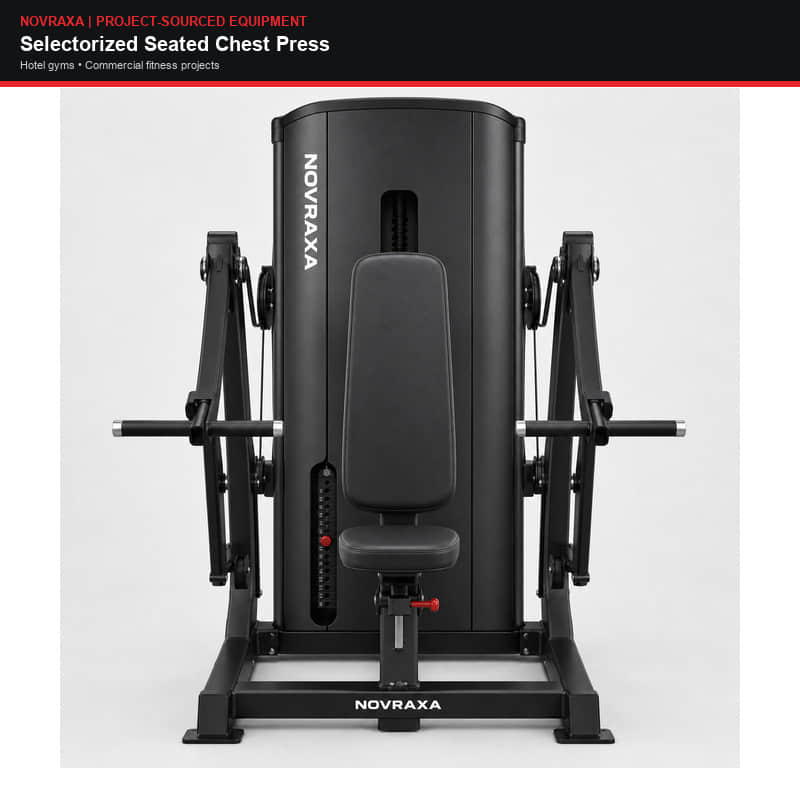
Chest Press
That name could describe:
Selectorized Chest Press
Plate-Loaded Chest Press
Incline Chest Press
Converging Chest Press
Iso-Lateral Chest Press
Bench Press Station
They all involve upper-body pressing.
But they are not interchangeable.
Compare these two:
Feature | Machine A | Machine B |
Name | Chest Press | Chest Press |
Main Movement | Horizontal Push | Horizontal Push |
Resistance | Weight Stack | Weight Plates |
Position | Seated | Seated |
Functions | Single | Single |
Type | Selectorized | Plate-Loaded |
The name is the same.
The equipment is not.
Machine A uses a weight stack.
The user changes resistance with a selector pin.
Machine B requires Olympic plates.
That affects:
how the machine feels
who it suits
what accessories you need
how much additional weight you must buy
how the gym floor is organized
A hotel gym serving general users may prefer simple selectorized machines.
A bodybuilding-focused commercial gym may intentionally want more plate-loaded equipment.
Neither is automatically better.
They simply serve different needs.
So before asking:
“Why is your chest press USD 250 more expensive?”
ask:
“Which chest press are we comparing?”
Use This 5-Point Check
When two machines have similar names, compare:
Training movement
Resistance system
Body position
Number of functions
Machine dimensions
Then look at the photos and specifications.
Only after that should you compare price.
4. Find Machines That Overlap Before You Pay for Them
A gym quotation can contain many different product names while still repeating the same basic training pattern.
For example:
Lat Pulldown
High Pulley
Pulldown
Iso-Lateral Pulldown
Lat Pulldown / Row
These products all overlap in vertical pulling.
But they are not necessarily interchangeable.
An iso-lateral pulldown may use independent arms.
A lat pulldown / row unit may also provide horizontal pulling.
A standard selectorized pulldown may be simpler and easier for general users.
So the question is not:
“Are they the same?”
The better question is:
“How much do their functions overlap, and do I need all of them?”
The same thing happens with lower-body machines.
You may see:
Hack Squat
V Squat
Linear Leg Press
45-Degree Leg Press
Squat Press
These belong to the same broad lower-body pressing category.
But their movement paths, loading systems and user experience can be very different.
For a large commercial gym, having several of them may be intentional.
You may want:
more training variety
more peak-hour capacity
different equipment for different member preferences
That makes sense.
But if you are planning a small hotel gym, buying five large lower-body pressing machines could waste a lot of valuable floor space.
Group the Equipment by Movement
A better approach is to organize your quotation into categories.
Upper-Body Push
Chest Press
Incline Press
Shoulder Press
Upper-Body Pull
Lat Pulldown
Seated Row
Rear Delt
Lower-Body Push
Leg Press
Hack Squat
Leg Extension
Lower-Body Pull
Leg Curl
Glute-focused equipment
Cable / Functional
Functional Trainer
Cable Crossover
Adjustable Pulley
Once you group the list this way, equipment overlap becomes much easier to see.
You may also discover something important is missing.
Supplier A may quote 50 machines.
Supplier B may quote 43.
Does that mean Supplier A gives you the better gym?
Not necessarily.
Ask:
Do both quotations cover the same training requirements?
That question is much more useful than simply counting machines.
5. Do Not Approve a Quotation With Only Name, Quantity and Price
If a supplier sends you a quotation containing only:
Product Name + Quantity + Unit Price
I would not approve the order yet.
You still do not know enough.
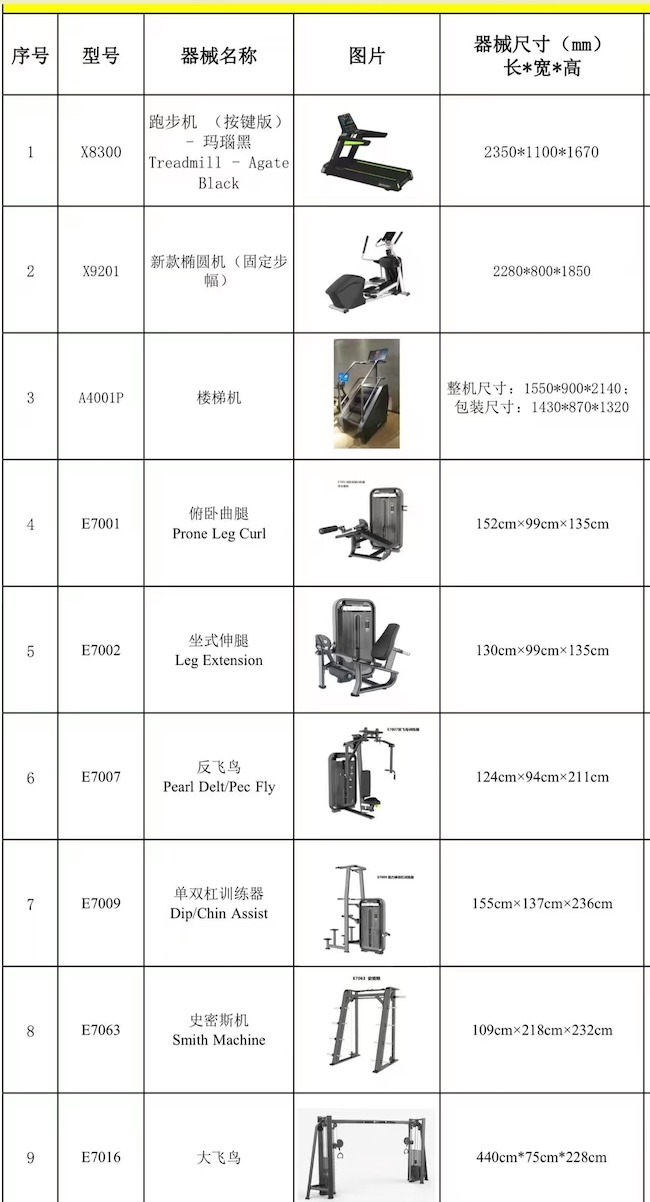
At minimum, ask for:
Product photo
Model number
Dimensions
Resistance type
Weight stack specification, if applicable
Main training function
Quantity
Unit price
Why do the photos matter?
Because names can be misleading.
One factory may call a machine:
Functional Trainer
Another may write:
Dual Adjustable Pulley
Another may write:
Cable Crossover
Depending on the design, these products may overlap heavily.
Or they may be very different.
A compact dual adjustable pulley may take relatively little wall space.
A traditional cable crossover may require much more room.
That difference matters when you:
plan the gym layout
calculate circulation space
decide where machines will sit
plan container loading
The name alone cannot tell you that.
Build One Visual Comparison Sheet
If you are comparing multiple suppliers, put everything into one file.
Add:
product photo
dimensions
resistance type
main function
machine type
Then mark each product:
Equivalent / Similar / Different
That makes supplier comparison much easier.
This is also where an experienced gym equipment sourcing company can be useful.
Not because buyers cannot read quotations.
The difficult part is knowing whether:
two different names actually describe similar products
or
two identical names describe completely different machines.
6. Compare the Whole Gym, Not 40 Individual Machines
This may be the most important point in the article.
You are not buying 40 independent machines.
You are building one gym.
So the quotation needs to work as one complete solution.
Imagine Supplier A is USD 4,000 cheaper than Supplier B.
That sounds attractive.
Then you look closer.
You discover:
several important training functions are missing
two machines overlap heavily
the cardio section is too large for the available space
there are too few cable stations
two machines do not fit the layout
Olympic plates are not included
dumbbell storage is missing
cable attachments are missing
That USD 4,000 saving suddenly looks very different.
You will still need to buy those items somewhere.
Meanwhile, another quotation may look more expensive because it already includes:
Olympic plates
plate trees
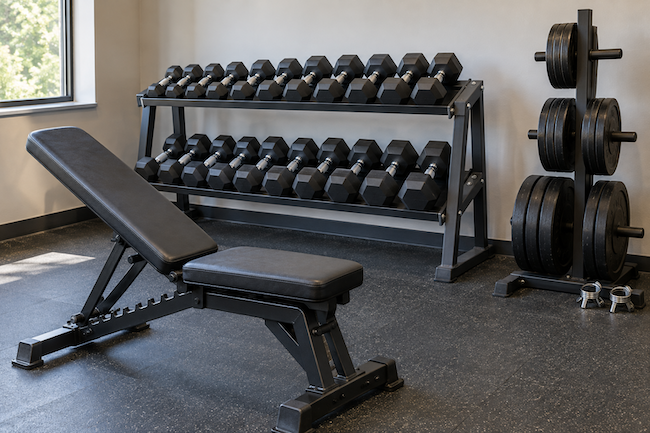
dumbbell racks
adjustable benches
cable attachments
accessory storage
These are not the most exciting products on a quotation.
But your gym still needs them.
That is why the cheapest quotation is not always the cheapest project.
How NOVRAXA Compares Gym Equipment Quotations
When we review a project, we prefer to compare it in this order:
Step | What We Check |
1. Facility Type | Commercial gym, hotel gym, apartment gym, corporate gym or studio? |
2. Floor Area | How much usable training space is actually available? |
3. Target Users | Beginners, hotel guests, office workers, serious lifters or mixed users? |
4. Training Coverage | Are cardio, strength, free-weight and functional needs covered? |
5. Capacity | Are there enough high-demand machines for peak-hour use? |
6. Equipment Overlap | Are several machines solving almost the same training need? |
7. Specifications | Are you actually comparing equivalent products? |
8. Price | Only now does the price comparison become meaningful. |
Notice where price appears.
Last.
That does not mean price is unimportant.
Of course it matters.
But a low price only means something after you know exactly what you are buying.
A Simple Rule for Matching Gym Equipment Names
If you remember only one thing from this article, remember this:
Compare gym equipment by training function first, machine type second, specifications third, and product name last.
Not the other way around.
One factory may say:
Butterfly
Another may say:
Pec Fly
Another may say:
Pec Deck
Different names do not automatically mean different machines.
And the same name does not automatically mean the same machine.
Before choosing a quotation, ask three questions:
What training function does this machine provide?
Do I already have another machine covering the same need?
Does this machine make sense for my users, floor space and expected traffic?
If you can answer those three questions, comparing supplier quotations becomes much easier.
FAQ
Why do different gym equipment suppliers use different names for the same machine?
There is no single naming system used by every commercial gym equipment manufacturer.
Factories may use technical names, marketing names, direct translations or names based on the main training movement.
That is why product names alone are not enough for comparison.
How do I know if two gym machines are equivalent?
Compare:
training movement
resistance system
body position
number of functions
dimensions
product photos
If these details differ, you should not compare the prices as if the machines were identical.
Are combination machines better than single-function machines?
Not necessarily.
Combination machines can be a smart choice for hotel gyms and compact fitness rooms where floor space matters.
Busy commercial gyms may benefit more from separate machines or independent stations because multiple users can train at the same time.
The right choice depends on expected traffic and available space.
What should a commercial gym equipment quotation include?
At minimum:
Product photo
Model number
Dimensions
Resistance type
Weight stack details, if applicable
Main training function
Quantity
Unit price
For larger projects, also check whether plates, benches, storage and accessories are included.
Should I choose the cheapest gym equipment quotation?
Not automatically.
First make sure the quotations cover the same training requirements and include comparable equipment.
Then compare the total cost.
How Can NOVRAXA Help?
If you already have quotations from two or three suppliers and the machine names do not match, you do not need to start again.
Send NOVRAXA:
your supplier quotations
facility type
gym floor size
target users
planned equipment list
destination country
We can help normalize the different quotations into one comparison structure.
That means looking at:
which machines are genuinely equivalent
which products only look similar
where training functions overlap
which important items may be missing
whether the equipment mix makes sense for the project
NOVRAXA is not built around pushing one factory's catalogue.
Different manufacturers are strong in different product categories.
A factory that makes good treadmills is not automatically the factory we would choose for selectorized strength equipment.
Another manufacturer may be stronger in plate-loaded machines.
Our job is to understand the project first and then match each equipment category with a suitable manufacturer.
We can also help coordinate:
machine specifications
paint colors and finishes
equipment consistency across factories
pre-shipment quality checks
shipment preparation
So instead of trying to manage several factories separately, the buyer can manage the project through one sourcing process.
Because a good gym equipment quotation is not the one with the longest list.
And it is not automatically the cheapest one.
It is the one where every machine has a reason to be there.
If you are planning a commercial gym, hotel fitness room or gym equipment distribution project, contact NOVRAXA and send us your equipment list or supplier quotations.
If you are still researching before buying, keep following the NOVRAXA website.
We will continue sharing practical guides about commercial gym equipment selection, supplier comparison and sourcing — the things quotation sheets usually do not explain.
About NOVRAXA
NOVRAXA helps commercial gym owners, hotel operators, distributors and project buyers source commercial gym equipment from suitable manufacturers in China.
We focus on equipment matching, manufacturer coordination, specification consistency, quality checking and shipment preparation, helping buyers manage mixed-equipment projects through one sourcing process.
Published: September 29, 2026
Last Updated: September 29, 2026
Prices used in this article are examples for comparison purposes only. Actual prices vary depending on specifications, quantity, manufacturer and shipping destination.