Welcome to NOVRAXA Fitness Equipment


English and Arabic Gym Equipment Names for Saudi Buyers: What to Buy—and What Overlaps
Your gym equipment list can be perfectly translated and still lead to the wrong purchase. Three machines may have different names but cover similar exercises. Two machines may share the same name but offer different resistance, adjustments, and user capacity. The expensive mistake is assuming the words tell you enough.
Picture this illustrative procurement meeting in Riyadh. A hotel buyer opens a quotation with twelve equipment lines. English descriptions sit beside Arabic notes. The manager points at two photographs. “We already have a cable machine. Why are we buying another one?” The buyer looks between “functional trainer” and “cable crossover.” Both have handles and weight stacks. Nobody has checked the pulley positions, usable resistance, or operating space.
That is where this guide starts. I will explain English and Arabic gym equipment names for Saudi procurement teams, then connect those names to buying decisions. You will learn what common machines do, which functions overlap, and what to confirm before ordering. Whether you run a commercial gym, purchase for a hotel, or distribute equipment, the goal is the same: build a useful training space with a clear equipment specification.
Three things to remember:
· A bilingual name helps your team communicate. An exact model identifies the purchase.
· Compare training movements, operating space, and independent user capacity.
· Overlapping functions can be useful when they serve different users or reduce waiting.
In this guide: Equipment names • Cardio choices • Strength equipment overlap • Cable machines and racks • Procurement specifications • Common questions
1. English and Arabic Gym Equipment Names: Start With a Shared Vocabulary
My first rule is simple: agree on the name, then confirm the machine.
Arabic equipment terminology varies between markets, suppliers, and gym users. Some people prefer descriptive Arabic. Others use familiar English names written in Arabic.
You may hear a Smith machine called جهاز سميث or سميث ماشين. Either can help a conversation. Neither tells you whether the machine has vertical or angled rails.
The table below provides practical Arabic descriptions for a procurement shortlist. These are working descriptions rather than an official Saudi naming standard. Before printing labels or approving bilingual documentation, have an Arabic-speaking equipment specialist review the wording.
English equipment name | Practical Arabic description | Main function |
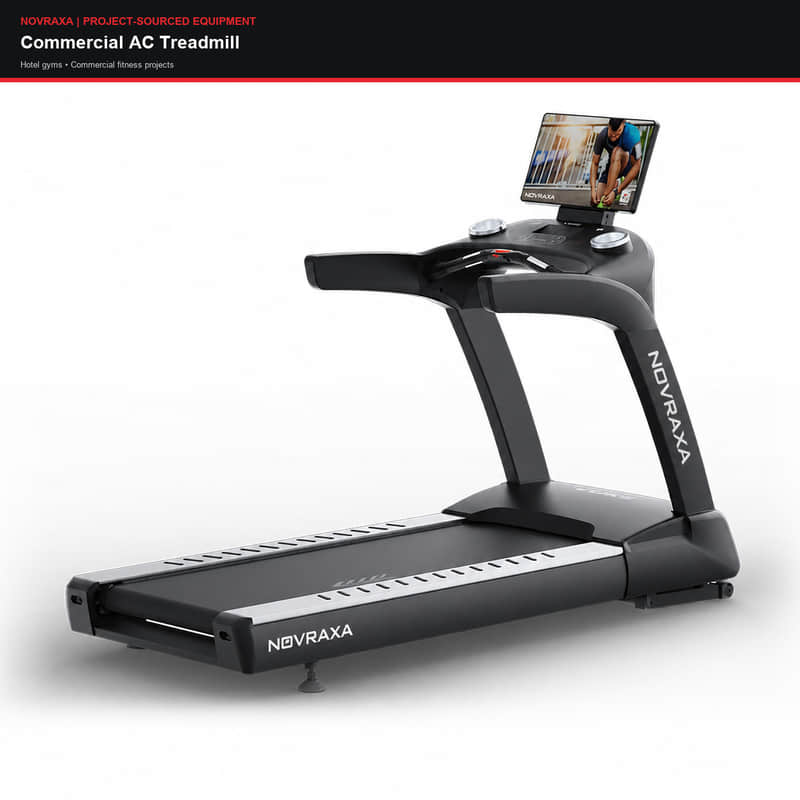
Treadmill | جهاز المشي / جهاز الجري | Walking or running on a moving belt |
Elliptical trainer | جهاز التدريب البيضاوي / إليبتيكال | Cardio exercise with an elliptical stepping motion |
Upright exercise bike | دراجة ثابتة عمودية | Cycling in an upright seated position |
Recumbent exercise bike | دراجة ثابتة بمقعد ذي مسند ظهر | Seated cycling with a backrest |
Indoor cycling bike | دراجة للتدريب الداخلي | Cycling with a riding position designed for indoor cycle training |
Rowing machine | جهاز التجديف | Cardio exercise using a rowing movement |
Stair climber | جهاز صعود الدرج | Repeated stepping or simulated stair climbing |
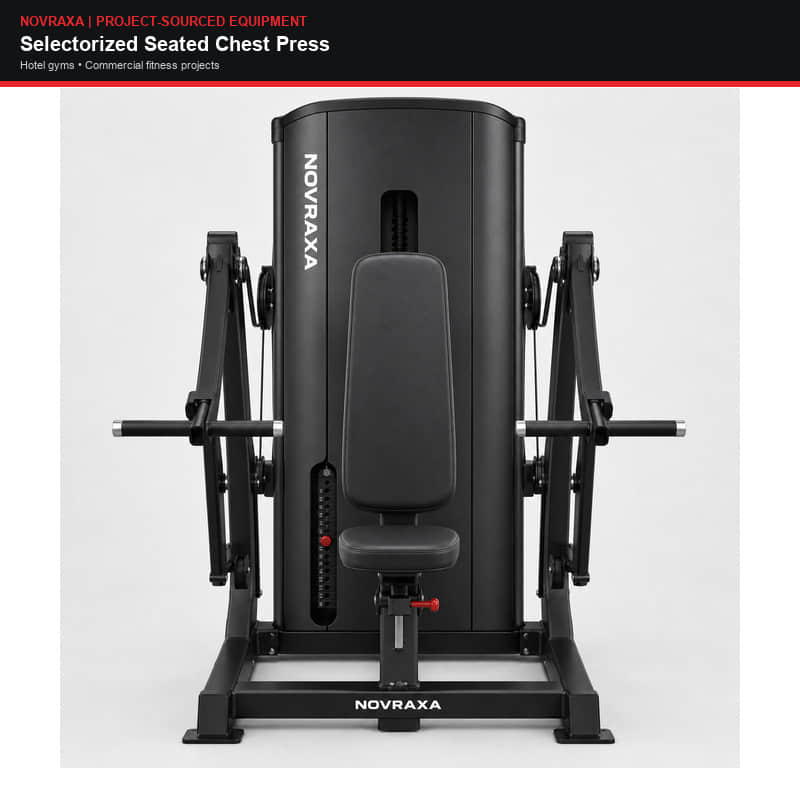
Chest press machine | جهاز ضغط الصدر | Upper-body pressing |
Shoulder press machine | جهاز ضغط الكتف | Pressing upward |
Lat pulldown machine | جهاز السحب العلوي | Vertical pulling |
Seated row machine | جهاز التجديف جالسًا | Horizontal pulling |
Leg press machine | جهاز ضغط الأرجل | Lower-body pressing |
Leg extension machine | جهاز تمديد الركبة | Straightening the knee against resistance |
Leg curl machine | جهاز ثني الركبة | Bending the knee against resistance |
Pec fly / rear delt machine | جهاز تفتيح الصدر والكتف الخلفي | Chest fly and rear-shoulder exercises |
Hip abductor / adductor machine | جهاز إبعاد وتقريب الفخذين | Moving the thighs outward or inward |
Assisted pull-up / dip machine | جهاز العقلة والمتوازي بمساعدة | Assisted pull-up and dip exercises |
Functional trainer | جهاز تدريب وظيفي بالكابلات | Multiple exercises using adjustable cables |
Dual adjustable pulley | جهاز بكرات مزدوجة قابلة للتعديل | Cable training from two adjustable outlets |
Cable crossover | جهاز كروس أوفر بالكابلات | Cable exercises between opposing columns |
Smith machine | جهاز سميث | Exercises using a guided barbell |
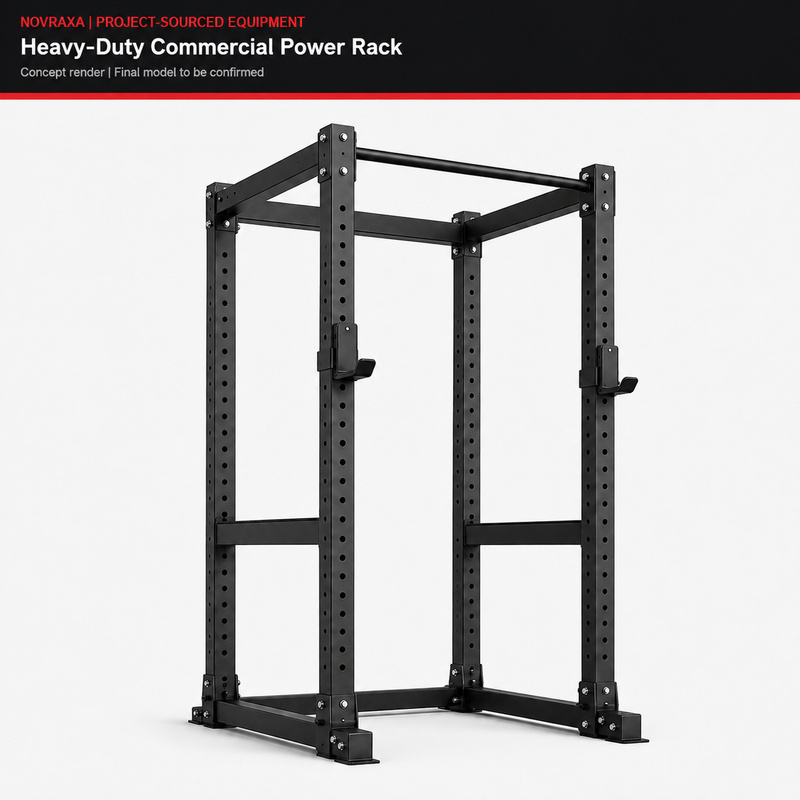
Power rack | قفص تمارين القوة | Supporting free-barbell exercises |
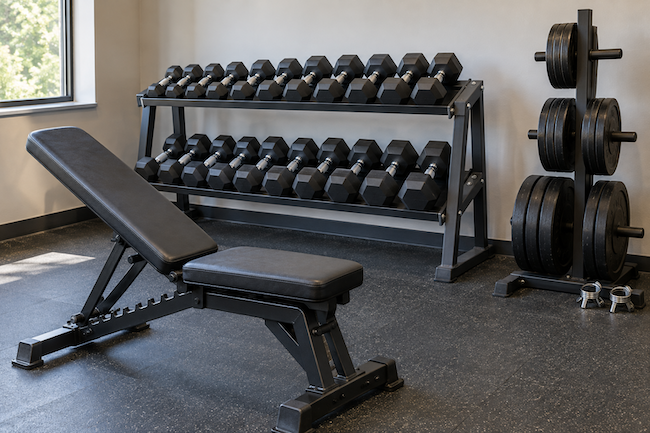
Adjustable bench | مقعد تمارين قابل للتعديل | Supporting exercises in different bench positions |
Dumbbells | دمبل / أثقال يدوية | Training with separate handheld weights |
Barbell | بار الأوزان | Training with a long weighted bar |
Weight plates | أقراص الأوزان | Loading bars or compatible machines |
Here is a documented example of why names need specifications. The Life Fitness Smith Machine lists a 7-degree bar angle and a 9 kg bar weight.
Those figures describe that model. They are not features you should assume every Smith machine has.
For each quotation line, record the English name, agreed Arabic description, model code, photograph, and selected configuration.
Distributors should use the same identity across purchasing records and sales materials. Hotel buyers should make sure the operator receives that information too.
One shared reference is easier to manage than several slightly different descriptions of the same purchase.
2. Cardio Equipment: Choose Useful Variety and Enough Capacity
Cardio machines share a broad purpose, but they give users different ways to exercise.
A treadmill supports walking and running. A bike provides seated cycling. A rower uses a coordinated rowing movement. An elliptical follows a different stepping path.
The question I would ask first is: Which activities will your users choose, and how many people need them at the same time?
Consider a real product-family example. Concept2’s RowErg, SkiErg, and BikeErg share the PM5 monitor, according to its equipment comparison guidance.
Three machines can offer familiar measurement tools while supporting different movements. Shared technology does not make their training functions identical.
Now imagine a hotel with room for four cardio units. This is a planning example, not a reported customer project.
Four different machines offer variety. Two treadmills and two bikes give more capacity for walking, running, and cycling. The better arrangement depends on guest demand.
For an existing gym, observe several busy periods. Record occupied machines, waiting users, and equipment people approach but leave unused. Ask staff what guests struggle to adjust.
For a new facility, discuss the expected users and the level of supervision available. Equipment that works well in a coached session may need clearer instructions in an independently used hotel gym.
Equipment | What distinguishes it | What to confirm |
Treadmill | Moving belt for walking and running | Running surface, electrical requirements, belt and deck service |
Upright bike | Upright seated cycling | Seat adjustment, access, resistance controls |
Recumbent bike | Cycling with a supported backrest | Seat access, adjustment range, operating space |
Elliptical trainer | Elliptical stepping movement | Stride feel, step-on height, moving-handle clearance |
Rowing machine | Coordinated rowing movement | Technique guidance, operating length, maintenance |
Stair climber | Repeated climbing or stepping | Ceiling clearance, access, cleaning and service |
Be specific when requesting a “bike.” An upright exercise bike, an indoor cycling bike, and an air bike can differ in riding position, resistance system, and controls.
Ask for a demonstration of the selected model.
For a Saudi hotel fitness room, readable English and Arabic instructions can help guests get started. Pair them with simple setup diagrams where useful.
You do not need every cardio category. You need a selection that matches your users and enough machines to support demand.
3. Strength Equipment: Muscle Overlap Does Not Automatically Mean Duplication
Two machines can involve the same muscle group without serving the same training need.
A chest press and a pec fly both involve the chest, but their movements differ. A lat pulldown and a seated row both involve the back, but one is primarily a vertical pull and the other a horizontal pull.
A leg press, leg extension, and leg curl also belong to different movement categories.
That is why I would map a strength equipment list by movement before counting machines.
Start with lower-body pushing, upper-body pushing, vertical pulling, horizontal pulling, knee extension, and knee flexion. Add other categories according to your training programme.
Then examine overlap.
Equipment comparison | Where functions overlap | Important difference | When both may be useful |
Chest press and barbell bench press setup | Chest pressing exercises | Guided machine movement versus free-barbell training | Different training preferences or demand for more pressing capacity |
Lat pulldown and functional trainer | Some vertical pulling exercises | Seat, thigh restraint, pulley position, and usable resistance | Dedicated pulling capacity alongside general cable training |
Smith machine and power rack | Some squat and pressing exercises | Guided bar path versus a separate free barbell | A programme that requires both training arrangements |
Combination leg machine and separate leg machines | Knee extension and knee flexion | Switching between exercises versus independent stations | Different space and peak-use requirements |
These comparisons describe categories. Check the actual models before deciding that one replaces another.
A real example is the Life Fitness Axiom Leg Extension / Leg Curl. It combines two exercises in one station and provides four roller-pad positions.
That is useful exercise coverage in one unit.
It still does not create two independent stations.
In an illustrative six-user strength circuit, one person might need leg extensions while another needs leg curls. With a shared combination station, they must coordinate their turns.
For a quieter hotel room, that may be perfectly acceptable. For a busy commercial gym, separate machines may better support demand.
I would add two columns to your shortlist: “training movement” and “independent users.” This reveals both missing functions and potential bottlenecks.
Do not remove every repeated movement. Two popular stations can be a sensible capacity decision.
The problem is buying overlap without knowing what it contributes.
4. Functional Trainers, Cable Crossovers, and Racks: Check the Limits Behind the Name
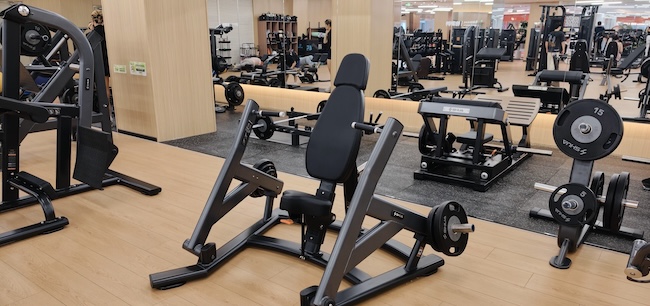
“Multifunctional” tells you that a machine does several things. It does not tell you how well it supports your most important exercises.
A functional trainer commonly uses adjustable cable outlets. A dual adjustable pulley describes a similar arrangement. A cable crossover often has opposing columns with a wider working area.
Supplier names vary, so photographs and specifications matter.
One particularly useful example is the Life Fitness Signature Series Dual Adjustable Pulley. Its published specifications list:
· Two 390 lb weight stacks.
· A 4:1 cable ratio.
· 97.5 lb effective resistance per stack.
The stack number alone does not describe resistance at the handle.
When comparing cable machines, request the manufacturer’s stated effective resistance, starting resistance, adjustment increments, and cable travel.
A quotation reading “100 kg stack” leaves too much unanswered.
Support and positioning matter too. A dedicated lat pulldown typically provides a seat and thigh restraint. A general cable machine may have a high outlet without the same seated support.
Both may allow vertical pulling. Their setup and suitability can still differ.
The same principle applies to racks. A Smith machine guides the bar along rails. A power rack supports exercises with a separate free barbell.
If you buy a rack, confirm the compatible bar, safety accessories, bench, plates, and storage. Do not assume everything shown in a catalogue photograph is included.
Before approving a multifunction station, ask the supplier to demonstrate five things:
1. The exercises your users will perform most often.
2. How the machine changes between those exercises.
3. The accessories required for each movement.
4. Whether users can train independently without interference.
5. The operating space needed for the demonstrated exercises.
For equipment sourced from China, request a video tied to the quoted model and configuration. A video of a similar machine is less useful.
I would also ask what happens when the station is occupied. Can users complete their planned workout elsewhere?
One flexible machine can be valuable. Your layout still needs enough capacity to make that flexibility available.
5. Turn the Bilingual List Into a Clear Procurement Specification
Once you understand the names and functions, turn your shortlist into something a supplier can quote accurately.
Start with space. Machine footprint and operating area are different measurements.
The Axiom combination leg machine discussed earlier lists a footprint of 142 × 102 cm and a recommended live area of 249 × 163 cm. Calculated from those published dimensions, that is approximately 1.45 m² for the footprint and 4.06 m² for the recommended operating area. Source: Life Fitness specifications.
For an illustrative 80 m² fitness room, a plan based only on machine footprints can look comfortably spacious. Add users, moving parts, access routes, and service requirements, and the result changes.
Have the layout reviewed against the selected equipment instructions and applicable building requirements.
Next, separate reference configurations from confirmed specifications.
NOVRAXA’s Commercial AC Treadmill page provides reference benchmarks including a 600 × 1554 mm running surface and a 1–20 km/h speed range. It explains that the final configuration requires confirmation with the selected factory.
That distinction belongs in your purchasing documents. Reference figures help define a requirement. Confirmed specifications identify what will be supplied.
Procurement field | What to request |
Equipment identity | English name, Arabic description, model code, configuration photograph |
Training function | Main movements and intended users |
Capacity | Quantity and independent user positions |
Resistance | Resistance system, usable range, cable ratio where applicable |
Space | Machine dimensions, operating area, service clearance |
Accessories | Included benches, bars, handles, plates, and attachments |
Electrical | Model-specific voltage, frequency, connection, and circuit requirements |
Delivery | Packed dimensions, weight, access route, assembly requirements |
Support | Warranty scope, maintenance documents, replacement-part process |
Commercial terms | Price basis, freight scope, installation scope, payment stages |
For powered equipment, have your building team confirm the supply available at the installation point. Ask the supplier to confirm compatibility in writing.
For Saudi imports, identify the applicable conformity route with your importer and an accepted conformity assessment body. SASO distinguishes regulated products requiring product conformity certification from non-regulated products using self-declaration, followed by the shipment certification process. Do not assume every item in a mixed order follows the same route. Source: SASO official guidance.
Also ask how replacement parts are identified and ordered. “Spare parts available” is less useful than a model-specific process for obtaining the correct cable, belt, pin, or bearing.
Finally, compare quotations on the same commercial basis.
An equipment-only price and a price including freight or installation cannot be compared fairly until you separate their scope.
Clear specifications make those differences visible before you commit.
6. Common Questions From Saudi Gym Equipment Buyers
What is a lat pulldown machine called in Arabic?
A practical description is جهاز السحب العلوي. Supplier terminology can vary, so pair the name with a photograph and model code. Confirm the seat, thigh restraint, handle options, and resistance configuration.
Is a functional trainer the same as a cable crossover?
The names can overlap, but they do not guarantee the same configuration. Compare column spacing, adjustable pulley positions, cable travel, weight stacks, effective resistance, and operating area. Choose according to the exercises and user capacity you need.
What is the difference between a Smith machine and a power rack?
A Smith machine constrains its bar with guide rails. A power rack supports training with a separate free barbell. Confirm the selected model’s safety equipment, dimensions, load limits, and included accessories.
Should a hotel gym buy combination machines or separate machines?
Combination machines may suit limited space and lower simultaneous demand. Separate stations can support independent users doing different exercises.
The two-function Axiom example shows the distinction clearly: one station covers leg extension and leg curl, but those functions do not create two independent user positions.
Check the complete layout and expected demand before choosing.
Does a larger weight stack mean more resistance?
Not necessarily. Cable ratios affect the effective resistance available to the user. The documented dual-pulley example has 390 lb stacks and a stated 97.5 lb effective resistance per stack. Compare usable resistance and increments rather than stack labels alone.
What should a bilingual gym equipment quotation include?
At minimum, include English and Arabic descriptions, model code, photograph, configuration, quantity, dimensions, resistance details, accessories, and price basis.
For a complete project, add operating areas, electrical requirements, delivery access, assembly scope, and support documentation.
Buy Equipment Your Team Understands and Your Users Will Use
The English name helps you search. The Arabic description helps your team communicate. The specification tells you what you are buying.
A good equipment list connects all three.
Choose machines by the training movements they support. Treat overlap as a decision about user needs and capacity. Check the operating space, included accessories, and service arrangements before approving the order.
Whether you are opening a gym in Saudi Arabia, upgrading a hotel fitness room, or building a distributor’s range, you want the same outcome: equipment that arrives as agreed and earns its place on the floor.
At NOVRAXA, the conversation starts with what your project needs. Its commercial equipment offering covers cardio, strength machines, free weights, and racks for gym and hospitality projects.
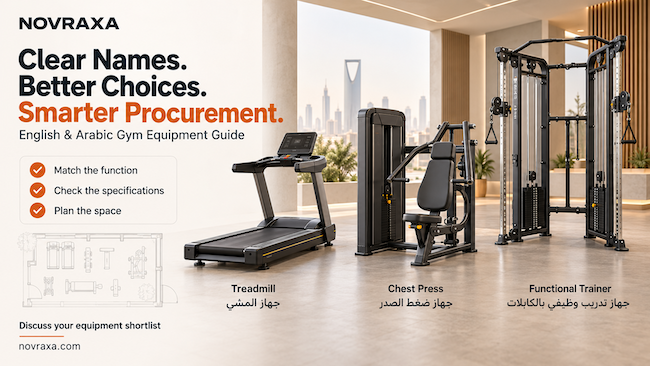
Contact NOVRAXA through the official website and send your equipment shortlist or floor plan, destination, and expected user profile. Ask to discuss training coverage, potential overlap, and the specifications that need confirmation before ordering.
If you are still planning, bookmark the NOVRAXA website and follow its equipment guidance as your project develops.
You do not need to memorize every machine name.
You need a list your team can understand—and a clear reason for every machine you buy.