Welcome to NOVRAXA Fitness Equipment


Gym Equipment Names Explained for First-Time Commercial Buyers
If you are opening a commercial gym for the first time, one of the first challenges you may face is understanding the names of different gym machines.
Walk into a well-equipped commercial gym and you may see dozens of strength machines. Some look similar, while others are designed for very specific movements and muscle groups. For a first-time gym owner or equipment buyer, it is not always easy to know what each machine is called or what it is designed for.
Understanding these names can make it much easier to plan your gym, communicate with equipment suppliers, and prepare an accurate equipment list.
In this guide, I will introduce 10 strength machines commonly found in commercial gyms, explain the main muscle groups they target, and show where they may fit into a modern gym facility.
I have intentionally left out familiar cardio equipment such as treadmills and stair climbers. Instead, we will focus on strength machines that first-time buyers may be less familiar with.
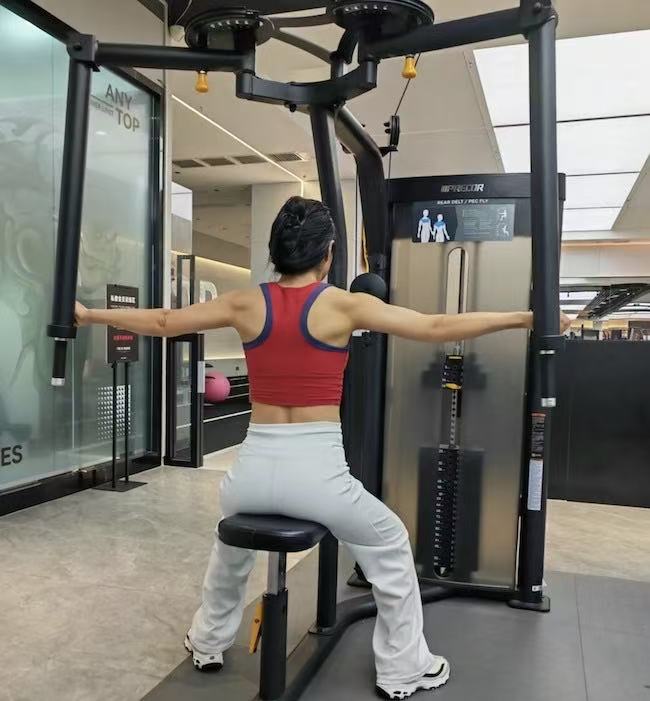
1. Reverse Pec Deck / Rear Delt Fly Machine
Main muscles targeted: Rear deltoids, rhomboids, middle and lower trapezius
The Reverse Pec Deck, also commonly called a Rear Delt Fly Machine, is mainly used to train the rear shoulders and upper back.
It can be particularly useful for members who want to strengthen their upper back, improve shoulder stability, and develop a more balanced upper-body physique.
Because many people spend long hours sitting at desks or using computers and mobile devices, exercises that strengthen the rear shoulder and upper-back muscles have become increasingly relevant for a wide range of gym members.
For a commercial gym, this machine can complement chest and shoulder pressing equipment and help provide a more balanced selection of upper-body training stations.
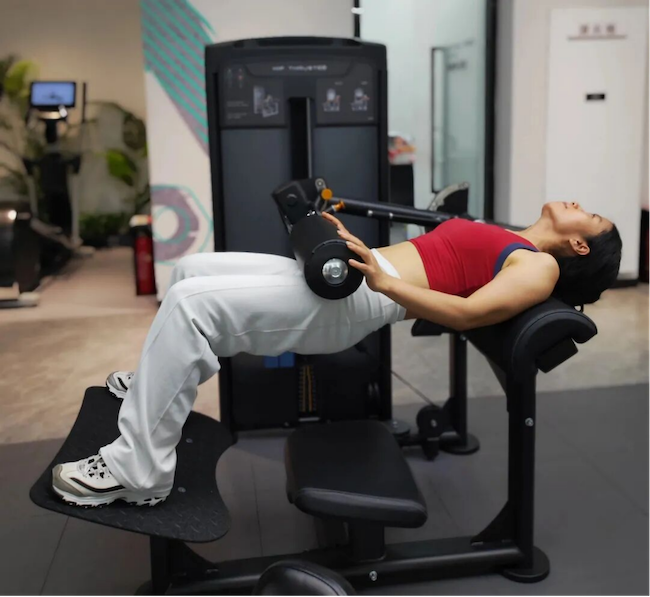
2. Hip Thrust Machine
Main muscles targeted: Gluteus maximus and hamstrings
The Hip Thrust Machine is designed primarily for glute training.
Compared with performing hip thrusts using a barbell and bench, a dedicated machine can make the setup easier and provide a more controlled training position.
It is useful for members who want to develop glute strength, improve lower-body power, or simply add more variety to their lower-body training.
Glute-focused training has become increasingly popular in modern commercial gyms, so a dedicated Hip Thrust Machine can be a useful addition to the strength area.
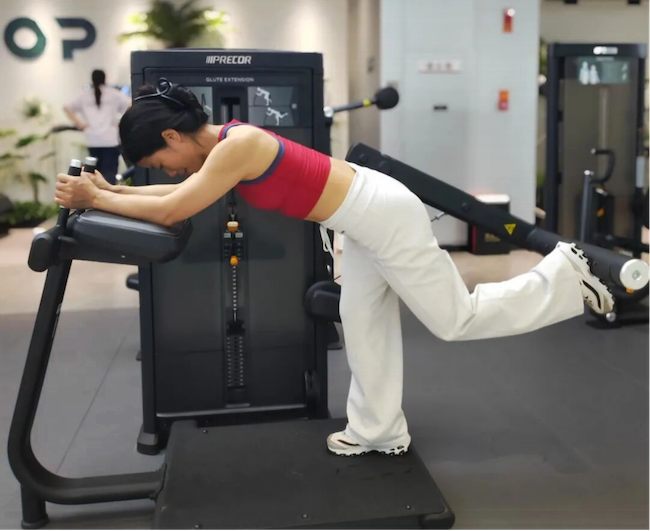
3. Standing Glute Kickback Machine
Main muscles targeted: Gluteus maximus and gluteus medius
The Standing Glute Kickback Machine allows users to train the glutes through a controlled backward leg movement.
It provides a relatively isolated way to target the glute muscles and can be useful for members who want to improve hip strength and lower-body development.
For commercial gyms with enough floor space, it can complement larger compound lower-body machines such as leg presses, hack squats, and Smith machines.
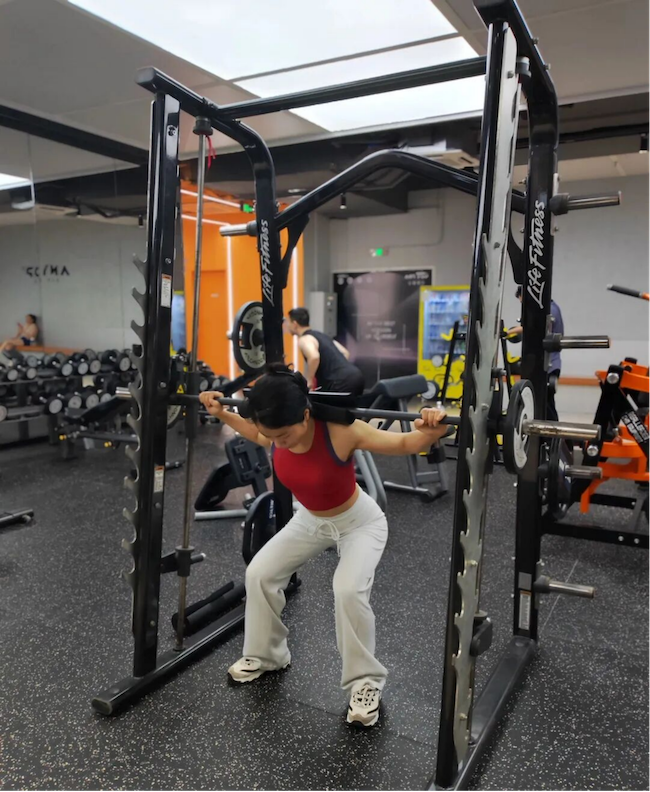
4. Smith Machine
Main muscles targeted: Depending on the exercise, the Smith Machine can train the quadriceps, glutes, hamstrings, chest, shoulders, and other major muscle groups.
The Smith Machine is one of the most recognizable pieces of strength equipment in a commercial gym.
Unlike a traditional barbell, the bar moves along fixed guide rails. This provides a controlled movement path and allows users to perform exercises such as squats, lunges, presses, and calf raises.
For beginners, the guided movement can make certain exercises easier to learn. More experienced members can also use the Smith Machine for a wide range of strength-training movements.
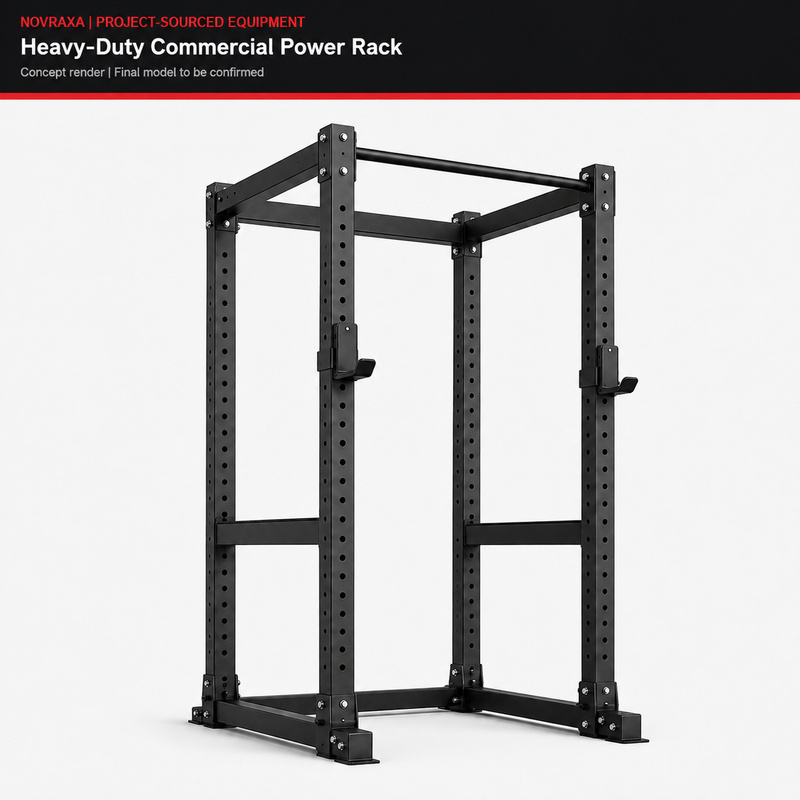
For first-time commercial gym buyers, it is worth understanding that a Smith Machine is different from a Power Rack. A Power Rack is designed primarily for free-weight barbell training, while a Smith Machine guides the bar along a fixed path.
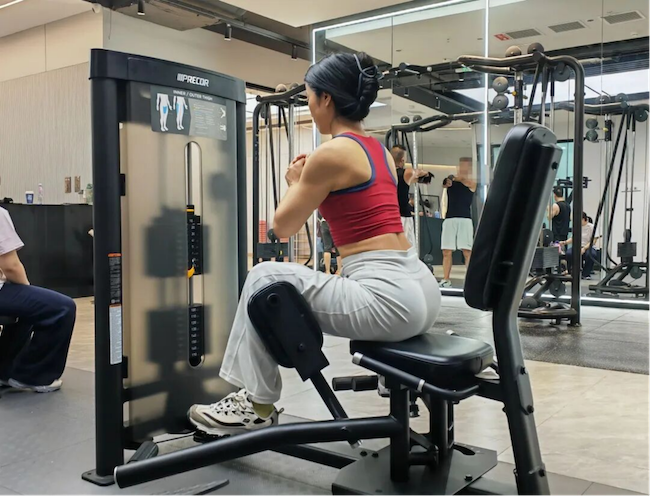
5. Hip Abductor / Adductor Machine
Main muscles targeted: Hip abductors, gluteus medius, adductors, and inner-thigh muscles
This machine combines two different movements.
When the user pushes the legs outward, the movement mainly trains the hip abductors and gluteus medius.
When the user brings the legs inward against resistance, the movement mainly targets the adductor muscles of the inner thigh.
A combined Abductor/Adductor Machine can be particularly useful for commercial gyms because two exercises can be performed on one machine, helping gym operators make better use of available floor space.
It is commonly included in lower-body strength-training areas and can serve a wide range of members.
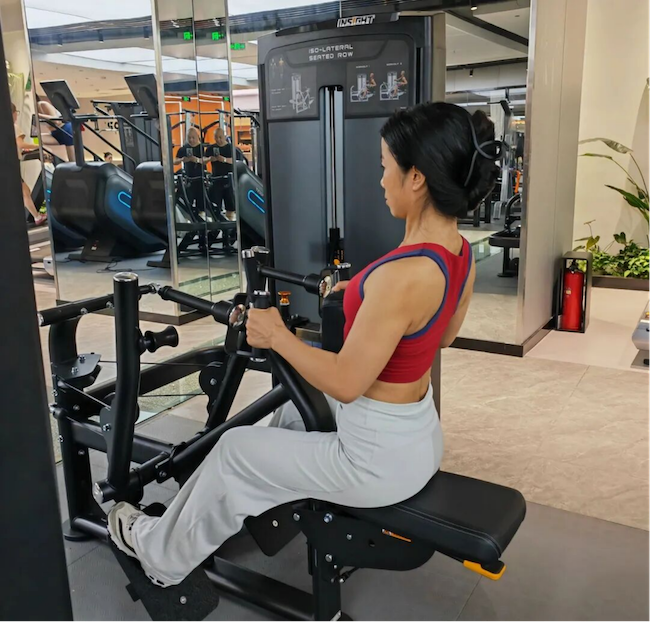
6. Iso-Lateral Seated Row Machine
Main muscles targeted: Latissimus dorsi, trapezius, rhomboids, rear shoulders, and arms
An Iso-Lateral Seated Row Machine allows the left and right arms to move independently.
This independent movement can help users train both sides of the back more evenly and makes it easier to focus on unilateral strength development.
The machine mainly targets the back and is useful for developing pulling strength and upper-body stability.
For commercial gym buyers, the term “iso-lateral” is worth remembering. When you see it in an equipment catalogue, it usually means that the left and right sides can move independently rather than being mechanically connected.
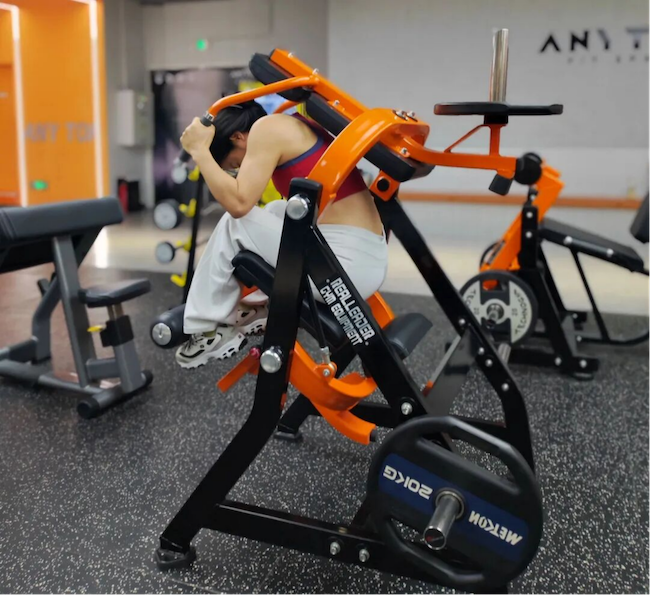
7. Abdominal / Back Extension Machine
Main muscles targeted: Abdominal muscles and lower-back muscles
This dual-function machine allows users to perform both abdominal flexion and back extension exercises.
When bending forward against resistance, the movement primarily targets the abdominal muscles.
When extending backward, the machine trains the lower-back muscles.
From a commercial buyer's perspective, the main advantage is efficiency: one machine can provide two training functions while occupying a relatively small amount of floor space.
This can make it particularly useful for gyms where space planning is an important consideration.
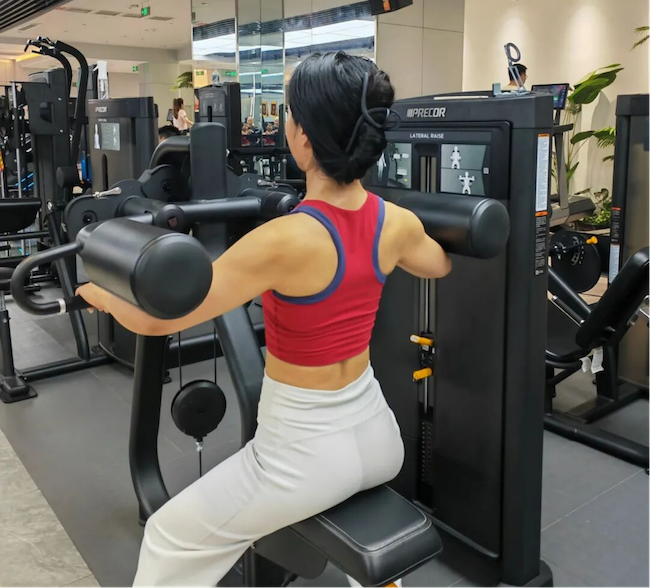
8. Lateral Raise Machine
Main muscles targeted: Middle deltoids
The Lateral Raise Machine is designed primarily to train the middle portion of the shoulder muscles.
The movement is similar to performing lateral raises with dumbbells, but the machine provides a fixed movement pattern and controlled resistance.
It can be useful for beginners who are still learning shoulder exercises as well as experienced members who want to isolate the deltoids.
For a commercial gym, it is typically positioned as part of the shoulder or upper-body strength-training area.
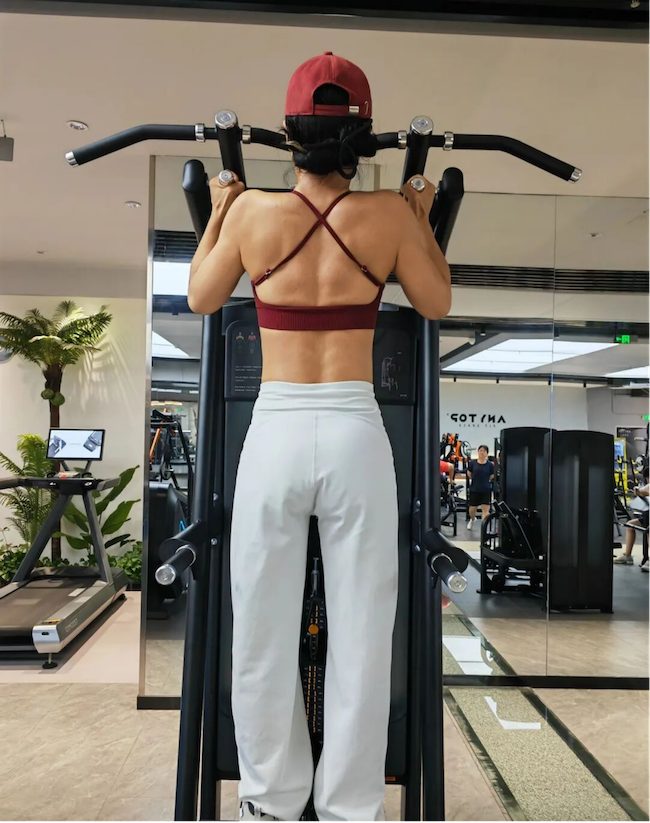
9. Assisted Pull-Up / Dip Machine
Main muscles targeted: Back, biceps, triceps, shoulders, and core, depending on the exercise
Pull-ups are highly effective, but many beginners cannot perform a full bodyweight pull-up when they first start training.
An Assisted Pull-Up Machine solves this problem by using counterweight assistance to reduce the amount of body weight the user needs to lift.
Many commercial versions also include an assisted dip function, allowing members to perform both pull-ups and dips on the same machine.
This makes the machine suitable for users with different strength levels and gives commercial gyms another versatile training station.
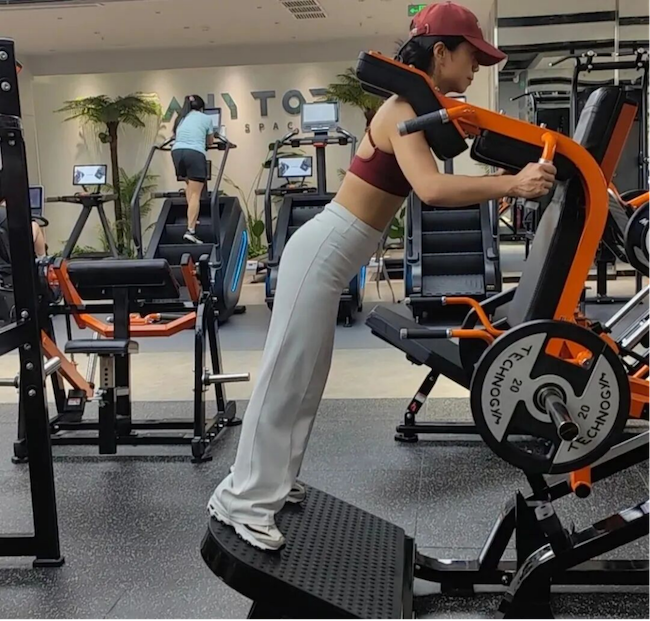
10. Standing Hack Squat Machine
Main muscles targeted: Quadriceps, glutes, hamstrings, and calves
The Standing Hack Squat Machine provides a guided squat movement with the upper body supported by pads.
Compared with a traditional free-weight squat, the machine provides a more controlled movement path and allows users to focus more directly on lower-body training.
It is particularly useful for training the quadriceps and glutes and can be included alongside leg presses, leg extensions, leg curls, and other lower-body machines.
For commercial gyms with a strong focus on strength training, a Hack Squat Machine can be an important part of the leg-training area.
Knowing the Equipment Names Is Only the Beginning
These are just 10 examples of strength machines that you may encounter when planning a commercial gym.
You may notice that I have not included treadmills, elliptical trainers, exercise bikes, or stair climbers. The reason is simple: most people already recognize these basic cardio machines, even if they have limited experience in a gym. This is also the distinction you made in the original article.
Strength equipment can be more complicated. Different machines may have similar designs, and the same type of machine may even be described differently by different manufacturers.
For a first-time commercial buyer, learning the names is therefore an important first step—but it is only the beginning.
Opening a successful gym is not simply about having enough budget to rent a space and purchase equipment. You also need to think about gym layout, member capacity, equipment mix, training zones, peak-hour usage, membership strategy, and day-to-day operations. Your original article also makes this broader point about layout, membership systems, and staff management.
A 300 m² hotel gym and a 1,500 m² commercial fitness club should not use the same equipment list.
Before requesting a quotation from a gym equipment supplier, it is therefore helpful to provide information such as:
Your gym type and total floor area
Target number of members or users
Available equipment budget
Preferred balance between cardio, strength, and free-weight equipment
Target market and country
Any special requirements for your project
With this information, it becomes much easier to create a commercial gym equipment list that matches the actual needs of the facility.
In future articles, I will continue sharing practical information about commercial gym equipment, hotel gym planning, gym layouts, equipment selection, and purchasing from China, with a focus on helping gym owners and first-time buyers make better purchasing decisions.