Welcome to NOVRAXA Fitness Equipment


Gym Equipment Parts Names: What to Know Before Ordering Spare Parts
By Novraxa Team
A replacement cable can have the right name, look almost identical to the old one, and still be wrong for your machine.
You ask for a “cable for a lat pulldown.” The supplier sends one with a similar coating and almost the same length.
Then you notice one end has an eyelet, while your machine requires a threaded terminal.
It does not fit.
That is the problem with many gym equipment spare parts:
Knowing the part name helps. But the name alone usually does not identify the exact replacement you need.
The same applies to pulleys, pins, pads, treadmill belts, motors and control boards.
So this guide is not just a list of gym equipment parts names. It explains how to give a supplier enough information to identify the correct part.
The basic rule is simple:
The part name tells us what it is. Your machine information, measurements and photos tell us which one you need.
1. Start With the Machine, Not the Part
When ordering spare parts, do not start with:
“I need a pulley.”
Start with the machine.
A functional trainer may use several pulleys with different diameters, grooves, bearings and mounting positions. Two can look nearly identical and still be incompatible.
Whenever possible, send:
Brand
Equipment type
Model number
Serial number
Full-machine photo
Machine ID label
Part location
Part number, if available
Original order reference, if available
Instead of saying:
“Pulley for my cable machine.”
say:
“Pulley at the top of the adjustable carriage on this dual adjustable pulley machine.”
That gives the supplier useful context.
A good order of information is:
Machine → Model → Serial Number → Part Location → Part Name → Measurements
You do not need perfect terminology. Clear photos are often more useful than using the wrong technical name confidently.
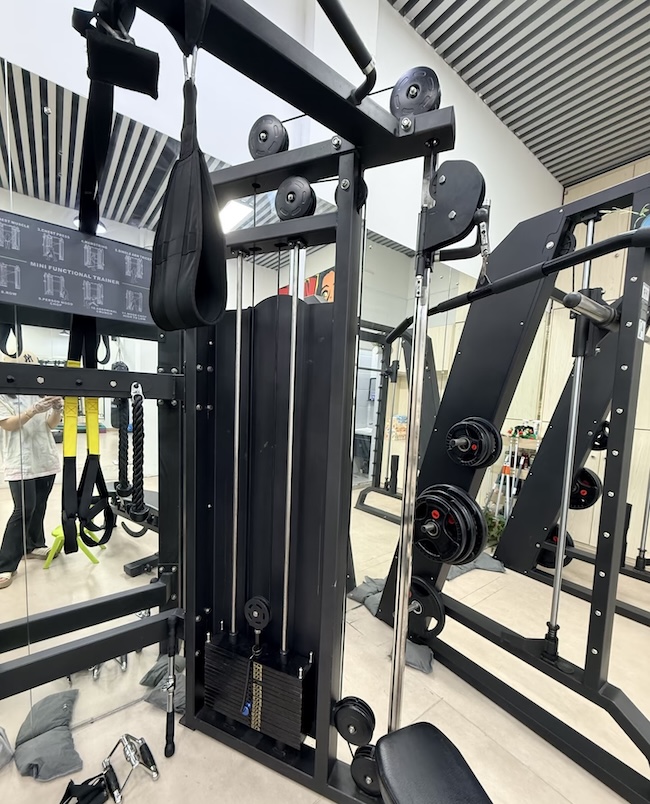
2. Cables, Pulleys and Weight-Stack Parts
Selectorized strength equipment contains several parts that work together.
A damaged cable, for example, may actually have been caused by a pulley that stopped rotating correctly.
So when ordering a part, explain both what the part is and what went wrong.
Cable
Common terms include:
Gym cable
Weight-stack cable
Strength machine cable
Coated steel cable
When ordering one, send:
Cable location
Part number, if available
Total length
Exact measurement points
Diameter including coating
Photos of both ends
Eyelet, loop or threaded terminal type
Thread size and pitch, if applicable
Ball-stop position
One common mistake is measuring differently from the supplier.
Measuring between the centres of the end fittings is not the same as measuring the full overall cable length.
A better request would be:
“I need the upper cable for the machine shown. Overall length is [X] mm, measured between the points marked in the photos. Coated diameter is [X] mm. Photos of both cable ends are attached. Could you confirm the correct replacement?”
Measurements help identify the cable.
They do not prove compatibility by themselves.
Pulley
A pulley is the wheel that guides the cable.
Check:
Outside diameter
Width
Groove dimensions
Bore diameter
Bearing number
Spacer details
Mounting position
Take photos from both sides.
A pulley may fit the mounting point but still have the wrong groove for the cable, so both need checking.
Selector Pin
A selector pin selects the resistance on a weight stack.
Provide:
Pin diameter
Insertion length
Handle shape
Retention method
Tether details, if fitted
Do not confuse it with a pop pin.
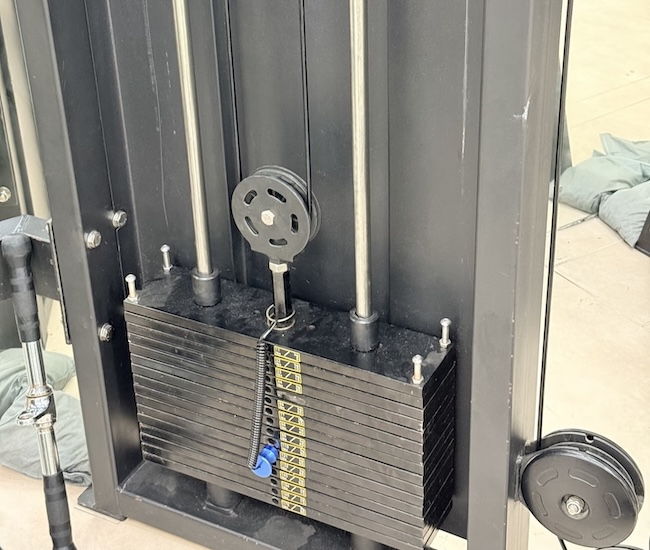
Weight Stack Plate and Guide Rod
For a replacement weight-stack plate, do not only give the marked weight.
Check:
Length
Width
Thickness
Guide-rod spacing
Hole dimensions
Selector-pin position
For guide rods, provide:
Diameter
Length
End design
If the weight stack is sticking, explain where it catches. The guide rod may not be the real cause.
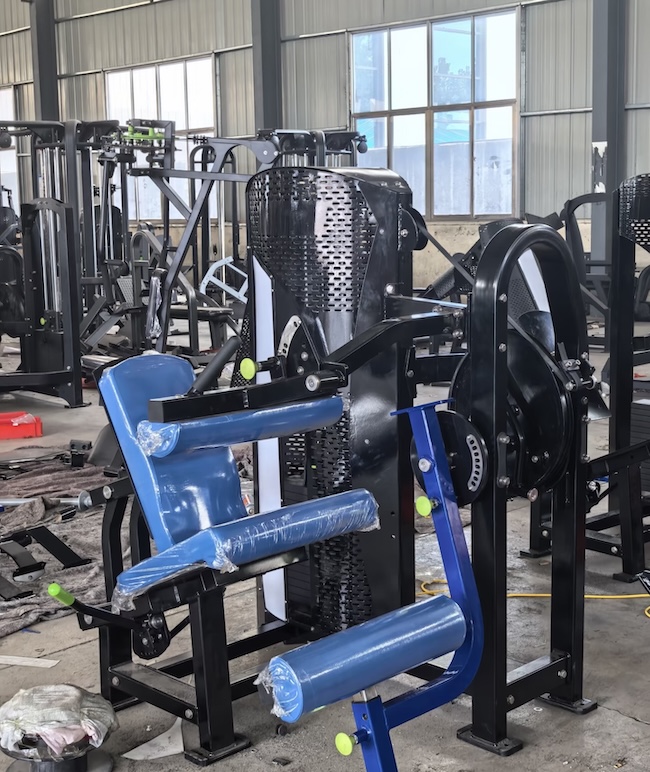
3. Pads, Rollers and Grips
Soft parts can also be difficult to match.
A seat pad may look correct from the front but have completely different mounting holes underneath.
For pads such as:
Seat pad
Back pad
Chest pad
Knee pad
Thigh pad
send:
Length
Width
Thickness
Mounting-hole spacing
Front photo
Rear photo
Also tell the supplier whether you need the complete pad, foam only or upholstery only.
Roller Pads
Measure:
Outside diameter
Length
Centre-hole diameter
A roller with the wrong centre hole will not fit the shaft even if the outside dimensions look correct.
Handle Grips
Check:
Internal diameter
Length
Shape
End design
These are small parts, but worn grips can make otherwise good equipment feel old.
4. Selector Pins, Pop Pins and Locking Pins
A request for “ten pins” is not specific enough.
Commercial gym equipment may use several types.
Selector pin: selects the load on a weight stack.
Pop pin: usually a spring-loaded adjustment pin for seats, backrests or telescopic frames.
Locking pin: locks a component into position.
Hitch pin: often used on racks, benches and removable attachments.
For threaded pop pins, check:
Thread diameter
Thread pitch
Thread length
Pin diameter
Extension length
Knob size
An M16 thread will not fit an M20 mounting thread.
Photograph the pin before removing it so the supplier can see what it does.
The goal is not to make the buyer an engineer.
The goal is to remove uncertainty.
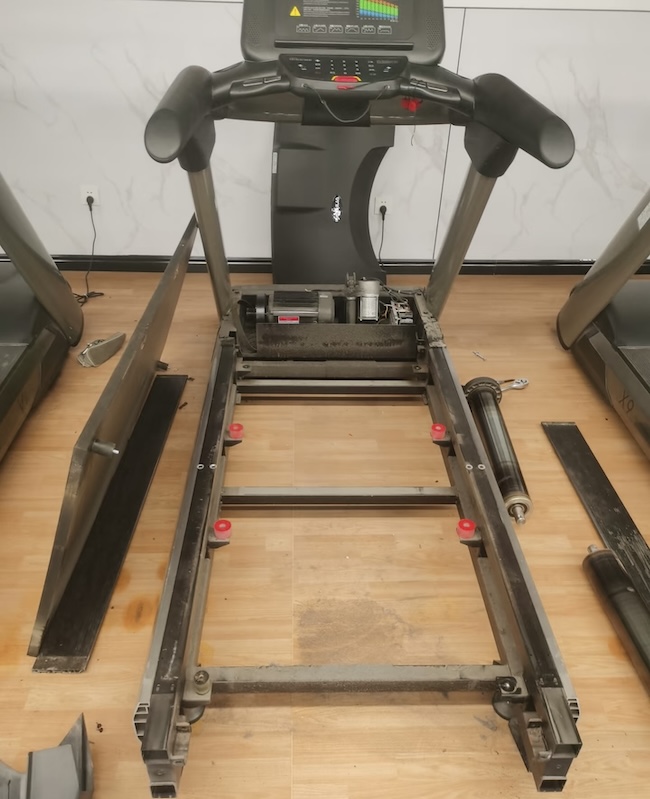
5. Treadmill Parts Need More Precision
Treadmills combine mechanical, electrical and electronic systems, so spare-parts matching is especially important.
Common treadmill parts include:
Running belt
Drive belt
Running deck
Front roller
Rear roller
Drive motor
Incline motor
Motor controller
Console
Display
Emergency stop key
Speed sensor
Always start with the exact treadmill model.
Running Belt vs Drive Belt
The running belt is the large belt you walk or run on.
The drive belt transfers power from the drive motor to the front roller on treadmills using that drive system.
So “I need a treadmill belt” is still too vague.
For the running belt, check:
Width
Full loop length
Thickness
Part number
For the drive belt, send photos of:
Printed markings
Belt profile
Rib details
Width
Running Deck
For a running deck, check:
Length
Width
Thickness
Mounting-hole positions
Ask the supplier to confirm the deck against the treadmill model.
Motor Controllers and Electronics
Do not match electronic parts by appearance alone.
Compatibility may depend on:
Part number
Revision
Voltage
Connectors
Firmware
Motor
Console
Send:
Model + serial number + electrical label + old board part number + clear photos
Also describe the fault and include any error code.
For international buyers, do not assume the electrical specification from the country where the treadmill is currently installed.
Check the machine label.
6. How to Order Gym Equipment Spare Parts
You do not need to memorize hundreds of part names.
You need a repeatable process.
Step 1: Photograph the Complete Machine
Take a full photo so the supplier can identify the equipment.
If several machines are involved, number each one.
Step 2: Show Where the Part Is Installed
Take a wider photo and mark the component.
Step 3: Take Clear Close-Ups
Photograph:
Front
Back
Sides
Connection points
Labels
Part numbers
Mounting holes
Step 4: Add Measurements
Use millimetres where possible.
Show where each measurement was taken from.
A number without measurement points can still cause confusion.
Step 5: Send Machine Details
Include:
Brand
Model
Serial number
Purchase year, if known
Order reference
Electrical details, if relevant
Quantity
Destination
Step 6: Describe the Fault
This is important.
Do not just tell the supplier which part you want. Tell them what the machine is doing wrong.
For example:
“The cable keeps coming off the pulley.”
This may point to a damaged pulley or alignment problem rather than just a bad cable.
Step 7: Confirm Before Ordering
Ask the supplier to confirm:
Proposed part
Part number
Photo
Quantity
What is included
Availability
Lead time
Shipping time
For multiple parts, number every request and match it to the quotation.
A Spare-Parts Request You Can Copy
Hi, I need help identifying a replacement part.
Brand: [brand]
Equipment type/model: [model]
Serial number: [serial number]
Part name/number: [if known]
Part location: [location]
Quantity: [quantity]
Destination: [city/country]
The problem is: [describe fault].
I have attached photos of the full machine, ID label, part location, close-ups and measurements.
Could you confirm the correct replacement, what is included, availability and lead time?
Please let me know if you need any additional measurements or photos.
7. Common Gym Equipment Parts Names
Equipment Area | Common Parts Names |
Cable Machines | Cable, pulley, selector pin, weight stack plate, guide rod |
Seats & Upholstery | Seat pad, back pad, chest pad, knee pad, thigh pad, roller pad |
Adjustments | Pop pin, locking pin, hitch pin, adjustment pin, knob |
Frames & Hardware | End cap, stopper, bolt, washer, bushing, spacer |
Handles & Grips | Handle, rubber grip, hand grip, end cap |
Treadmills | Running belt, drive belt, running deck, front roller, rear roller, drive motor |
Treadmill Electronics | Motor controller, console, display, speed sensor |
Racks & Benches | J-hook, safety arm, spotter arm, adjustment pin |
Smith Machines | Guide rod, linear bearing, safety stop, hook, bar sleeve |
Use the table to identify the general component.
Do not use it as a compatibility chart.
Knowing the name tells you what the part is. It does not tell you whether that exact part fits your machine.
8. What Should a Commercial Gym Keep in Stock?
You do not need to stock every possible spare part.
Think about:
How often could this part fail?
and
How long would replacement take?
Useful low-cost spares may include:
Selector pins
Pop pins
End caps
Rubber stoppers
Handle grips
Common pulleys
Treadmill emergency stop keys
For larger or model-specific parts such as cables, motors, controllers and running decks, accurate records may be more useful than keeping everything in stock.
Keep a record for each machine:
Brand
Model
Serial number
Purchase date
Electrical details
Known part numbers
Previous replacements
Supplier contact
For commercial gyms and hotels, lead time matters.
A cheap part can still create a serious service problem if a machine remains unusable for several weeks.
9. Frequently Asked Questions
What are common gym equipment parts names?
Common parts include cables, pulleys, selector pins, guide rods, seat pads, roller pads, pop pins, running belts, drive belts, motors and controllers.
The part name identifies the component type. Machine details determine the exact version needed.
What is the difference between a selector pin and a pop pin?
A selector pin selects resistance on a weight stack.
A pop pin adjusts and locks components such as seats and backrests.
How can I avoid ordering the wrong spare part?
Send the machine model, serial number, photos, part location, measurements and fault description, then ask the supplier to confirm the replacement before ordering.
What is the difference between a running belt and a drive belt?
The running belt is the surface the user runs on.
The drive belt transfers power from the motor to the front roller.
Can I replace a treadmill control board with one that looks similar?
Not safely based on appearance alone.
The supplier should verify the board part number, revision, electrical requirements and compatibility with the motor and console.
10. Getting the Name Right Is Only the First Step
A pulley may cost very little.
A selector pin is a small part.
A cable looks simple.
But if the replacement is wrong, an expensive machine can still remain out of service.
That is why a spare-parts request should not begin with:
“How much is this part?”
A better starting point is:
“This is my machine. This is where the part is installed. These are the measurements. This is the problem. Can you help identify the correct replacement?”
Getting the name right is only the first step. Getting the match right is what matters.
A part name tells us what the component is.
Your machine information, measurements and photos tell us which one you actually need.
Need Help Identifying a Gym Equipment Spare Part?
Send Novraxa:
Machine model
Serial number
Full-machine photo
ID label
Part photos
Measurements
Fault description
Quantity
Destination country
We can help identify the component and check the replacement with the relevant manufacturer.
And if you are buying equipment for a commercial gym, hotel fitness room, corporate gym or distribution project, spare-parts support should be considered from the beginning.
Because buying commercial gym equipment is not only about getting the machines delivered.
It is also about being able to keep them running.