Welcome to NOVRAXA Fitness Equipment


Strength Training Equipment Names by Movement Pattern
A buying guide for commercial gyms, hotels, workplaces and residential projects in the Middle East
A gym can look fully equipped and still leave users with limited training options. Several chest press machines may offer similar movements, while hip extension or single-leg training has no practical place in the room.
Before asking which gym equipment names belong on your purchase order, ask what users will be able to do. A stronger equipment list starts with movement coverage, then adds the capacity needed at busy times.
For owners and procurement teams in Saudi Arabia, the UAE and neighbouring markets, this approach makes supplier proposals easier to compare. It turns a list of commercial gym equipment into a plan for training, space and day-to-day use.
Strength training equipment names at a glance
Use this table to check coverage. These are equipment options, not a requirement to buy every item. One versatile station may cover several rows, depending on its design and setup.
Movement pattern | Common commercial equipment names |
Horizontal push | Chest press machine; adjustable bench with dumbbells; bench press station |
Horizontal pull | Seated row machine; low row cable station; chest-supported row machine |
Vertical push | Shoulder press machine; adjustable bench with dumbbells |
Vertical pull | Lat pulldown machine; assisted pull-up machine; pull-up station |
Squat or knee-dominant | Leg press machine; hack squat machine; squat rack or power rack; Smith machine |
Hip hinge or hip extension | Barbell or trap bar; kettlebells; hip thrust or glute drive machine; 45-degree back extension bench |
Single-leg or unilateral | Dumbbells; stable step platform; adjustable cable station; suitable independent-arm or independent-leg machines |
Core | Dual adjustable pulley or functional trainer; exercise mats; abdominal crunch machine |
Unilateral training overlaps the other patterns. Core is a broader category covering trunk movement and stability. Both deserve a separate procurement check so they are not overlooked.
Check upper body coverage before adding variety
Horizontal push
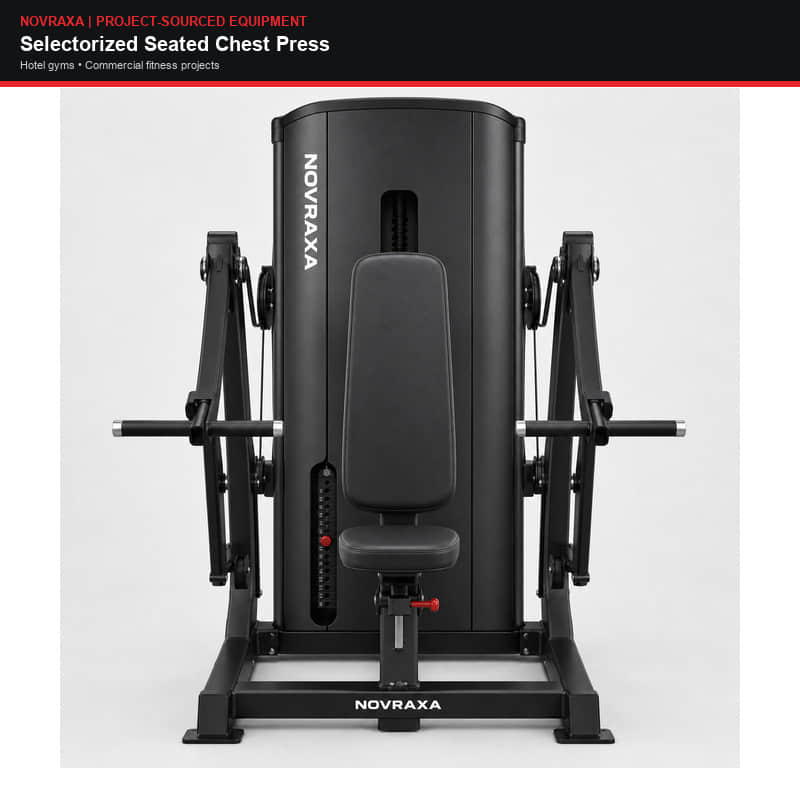
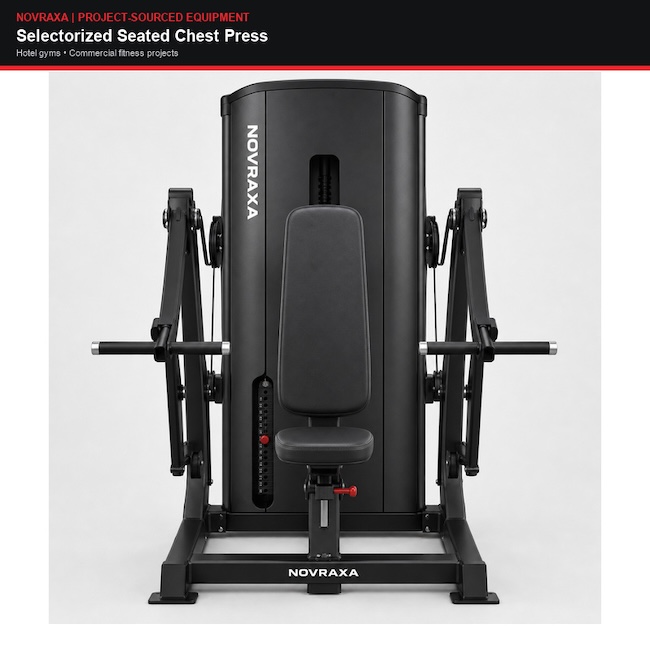
Common names include chest press machine, converging chest press and bench press station. An adjustable bench with dumbbells can also provide horizontal pressing, with different bench positions adding exercise options.
For procurement, check seat adjustment, starting position and resistance increments. Several pressing machines may be justified by demand, but buying multiple chest press variations early can consume the budget needed for missing lower-body or pulling options.
Horizontal pull
Look for a seated row machine, low row cable station or chest-supported row machine. These provide resistance for pulling towards the torso. A lat pulldown serves a different direction and should not automatically be counted as horizontal pulling coverage.
A combined pulldown and low row machine can consolidate functions. Confirm the changeover process and the number of users the specific design can accommodate at once; two exercise names do not necessarily mean two available stations.
Vertical push
A shoulder press machine or an adjustable bench with dumbbells can provide overhead pressing. Check adjustment range and the space above the user, including nearby fixtures and building services.
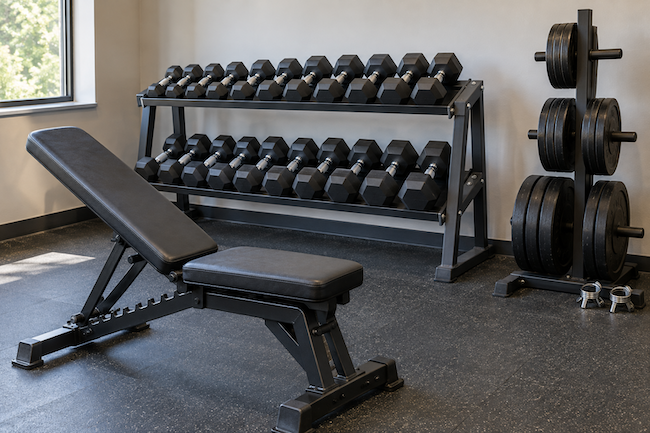
Choose the format around the intended users. A dedicated machine offers a defined setup, while dumbbells share equipment across more exercises. Shared benches and popular dumbbell weights can become a bottleneck even when the equipment list looks complete.
Vertical pull
Common options include a lat pulldown machine, assisted pull-up machine and pull-up station. An unassisted pull-up bar alone may not offer a practical starting point for all users.
Check access, grip options, resistance or assistance range, and overhead clearance. If a cable trainer is proposed as the only vertical pulling option, ask the supplier to demonstrate the intended setup, including seating or body support and suitable attachments.
Understand what a multifunction station really covers
A dual adjustable pulley, often called a functional trainer, can support several pressing, pulling and core exercises. Its useful range depends on pulley travel, attachments, resistance and the space around it.
Count those functions in the coverage review, then count its actual simultaneous users in the capacity review. Confirm both with the supplier. A station that supports many exercises can still cause queues when several users need it at the same time.
Protect lower body and core coverage
Squat and knee-dominant movements
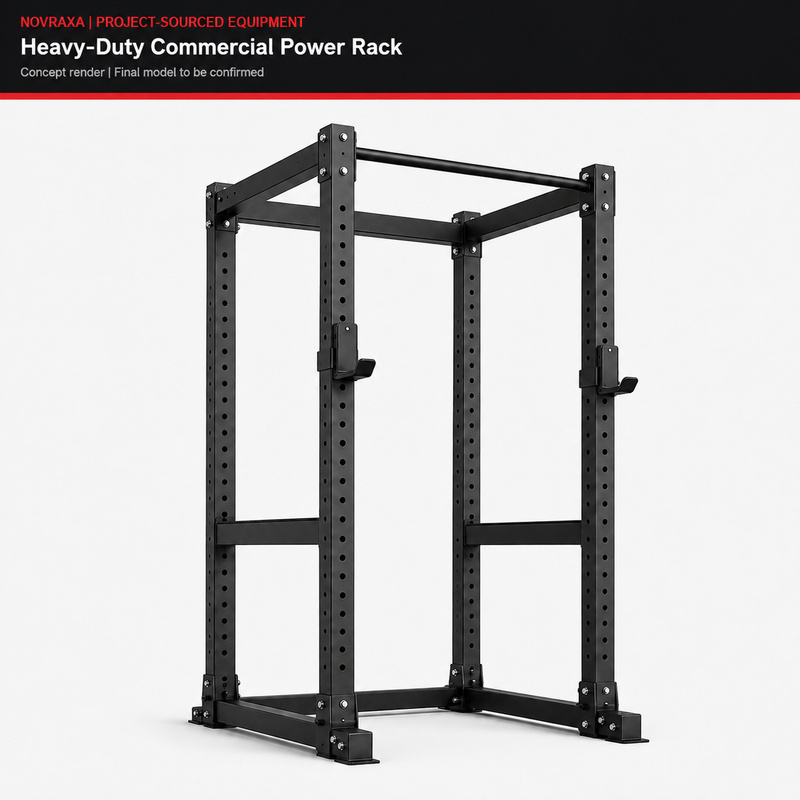
Common options include a leg press machine, hack squat machine, squat rack, power rack and Smith machine. These are different ways to provide knee-dominant lower-body training; they are not identical training experiences.
Compare access, adjustment, loading and operating space. A leg extension machine provides isolated knee extension, but should not be the only item used to tick off broader squat or knee-dominant coverage. A Smith machine also needs suitable stops, setup and user instruction.
Hip hinge and hip extension
Barbells, trap bars and kettlebells can support hinge-based exercises. Hip thrust or glute drive machines provide a dedicated hip extension option. A 45-degree back extension bench may also support hip-focused work, depending on technique and setup.
A hinge and a hip thrust are related options, not interchangeable exercises. Select a practical solution for your users, supervision and floor plan. A leg curl machine trains knee flexion and should not be treated as a complete substitute for hip extension coverage.
Single-leg and unilateral training
Dumbbells, a stable step platform and clear floor space can support split squats and step-ups. Some machines also allow one limb to work independently; confirm this for the proposed model.
Check that users have room to move and a suitable way to set up. A dumbbell rack squeezed into a circulation route does not create a usable unilateral training area.
Core training
Provide options for trunk control as well as movement. Mats allow exercises such as planks, while an adjustable cable station can support anti-rotation exercises such as the Pallof press. An abdominal crunch machine offers loaded trunk flexion, but covers only part of this category.
Reserve usable floor area and accessory storage. Core training often needs less dedicated machinery than other categories, but it still needs a defined place in the plan.
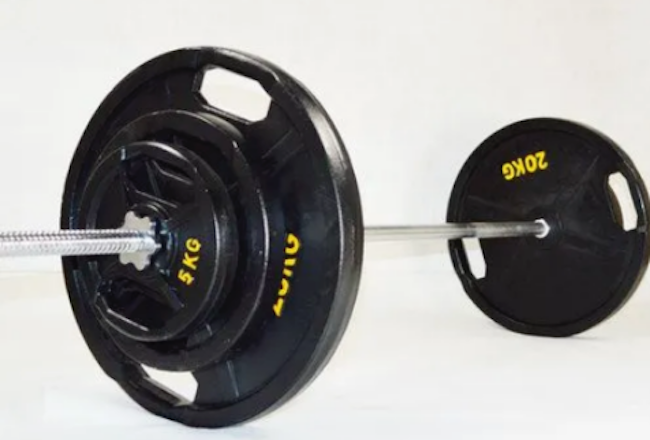
A barbell can support several movement patterns. Include the required plates, storage and training space in the specification.
Match the equipment mix to the facility
Commercial gyms
Build around the membership profile and expected busy periods. A facility serving experienced strength users may need more racks, benches, free weights and dedicated machines. Duplicate equipment can be a sensible purchase where demand supports it.
Prioritise missing movement coverage first, then add capacity at likely pressure points. Avoid filling the room with specialist variations while basic movements depend on one heavily shared station.
Hotel gyms
Plan for guests with different experience levels and limited time to learn unfamiliar equipment. Clear adjustments, readable instructions and practical resistance ranges matter. A compact selection can work if guests can access it without complicated setup or constant assistance.
Balance multifunction equipment with ease of use and availability. An attractive, compact station is less useful if it becomes the only route to most strength exercises during a busy period.
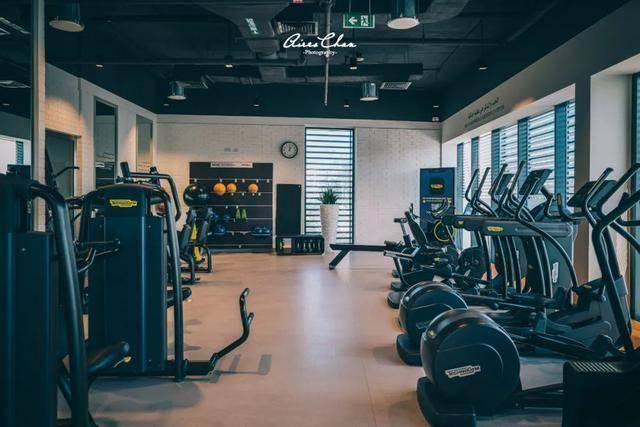
Corporate gyms and residential projects
Estimate the people likely to train at the same time, rather than sizing the room only from total staff or resident numbers. Consider concentrated use around work schedules, available supervision, noise near occupied rooms and who will return accessories to storage.
Choose straightforward equipment and a manageable free-weight range based on the intended users. The same movement checklist applies, but the mix and quantities should follow the project brief.
Project requirements in Saudi Arabia and the UAE
Confirm the operator’s access arrangements, privacy needs, opening hours and preferred instruction languages before the layout is fixed. Where a project includes separate training areas, check movement coverage and capacity within each area.
Ask who will install and service the equipment in the project city, which spare parts are held locally and what support is included. These questions apply to a specific supplier and contract; a regional sales presence alone does not answer them.
Plan space around users as well as machines
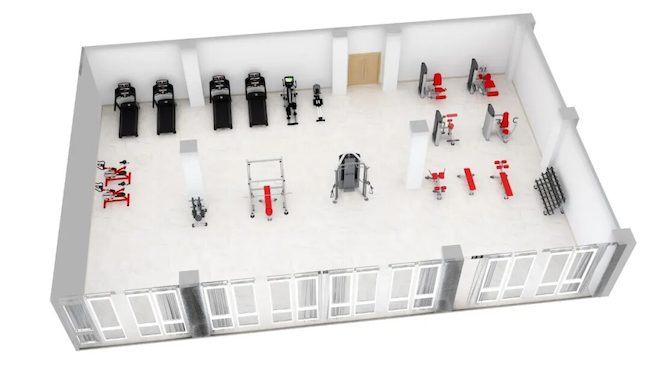
Use the manufacturer’s installed dimensions and required operating clearances, then allow for circulation, loading, bench movement, storage and maintenance access. A machine footprint alone does not show how much room it needs in use.
Confirm delivery access, floor suitability, overhead clearance and any anchoring requirements with the relevant project teams. For free weights, consider flooring and noise alongside the equipment order.
Turn the movement checklist into a purchase order
Set priorities within the budget
Start with usable coverage of the basic patterns. Next, fund the capacity required at peak times. Add specialist machines when they serve a clear user need. This makes the budget easier to defend than buying a long list of familiar product names.
Compare the installed and ongoing cost: equipment, delivery, assembly, flooring, storage, accessories, maintenance and replacement parts. Check commercial-use warranty terms and exclusions for the proposed setting.
Test the plan at peak time
Walk through a busy session on the floor plan. If one user is using the cable trainer, another needs the adjustable bench and others want the same dumbbells, can the remaining users still train? Use that review to decide where duplicate stations or accessories add value.
For each item on the gym equipment list, record its primary movement, secondary uses, quantity, simultaneous user capacity, space requirements, included accessories and service provision. Count a shared station only once in the simultaneous-capacity total.
Review maintenance before ordering
Request a written maintenance schedule, warranty scope, service response arrangements and spare-parts lead times. Review wear items such as cables, pulleys, upholstery and adjustment mechanisms, and assign responsibility for inspections and service records.
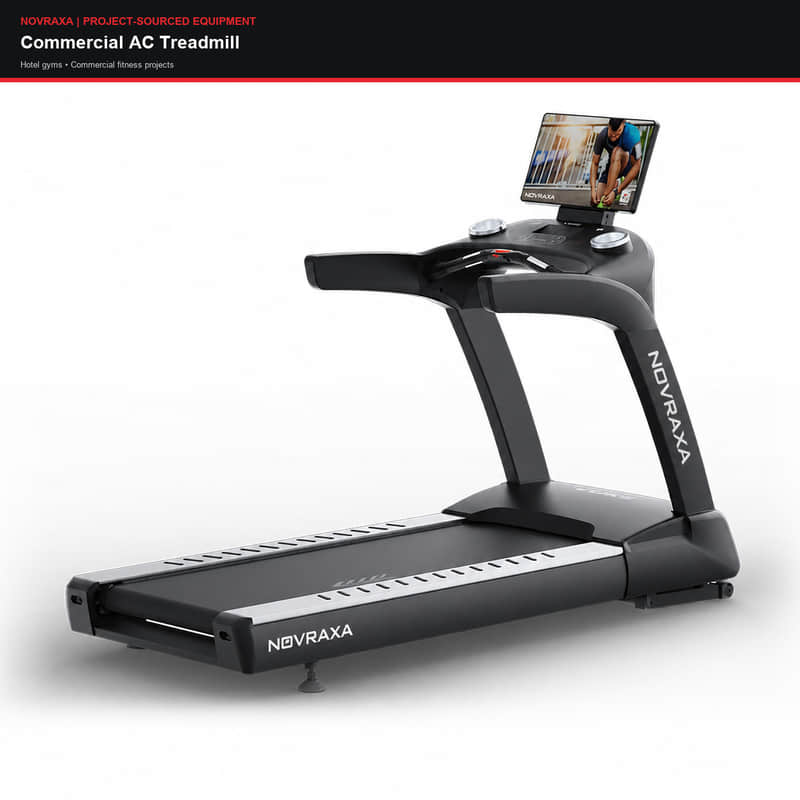
Keep cardio on a separate schedule. Treadmills, indoor cycles and rowing ergometers may belong in the facility, but they do not close gaps in this strength training checklist. A rowing ergometer is not the same procurement item as a seated resistance row machine.
Final procurement checklist
· Coverage — Every movement category has a usable option for the intended users.
· Capacity — Shared stations and likely queues have been reviewed for busy periods.
· Fit — Users can adjust, access and operate the selected equipment appropriately.
· Space — The plan includes working clearances, circulation, storage and service access.
· Cost — The quotation includes the accessories and installation needed for actual use.
· Support — Commercial-use terms, maintenance responsibilities and local service are clear.
Common buyer questions
Does every movement pattern need a separate machine
No. Free weights and multifunction stations can cover several patterns. The deciding questions are whether the setup is practical for your users and whether enough options remain available at busy times.
How many strength machines should a gym buy
There is no universal number. Set quantities from the user profile, expected simultaneous demand, usable floor area, budget and service needs. Approve a balanced, workable training plan before approving the equipment count.